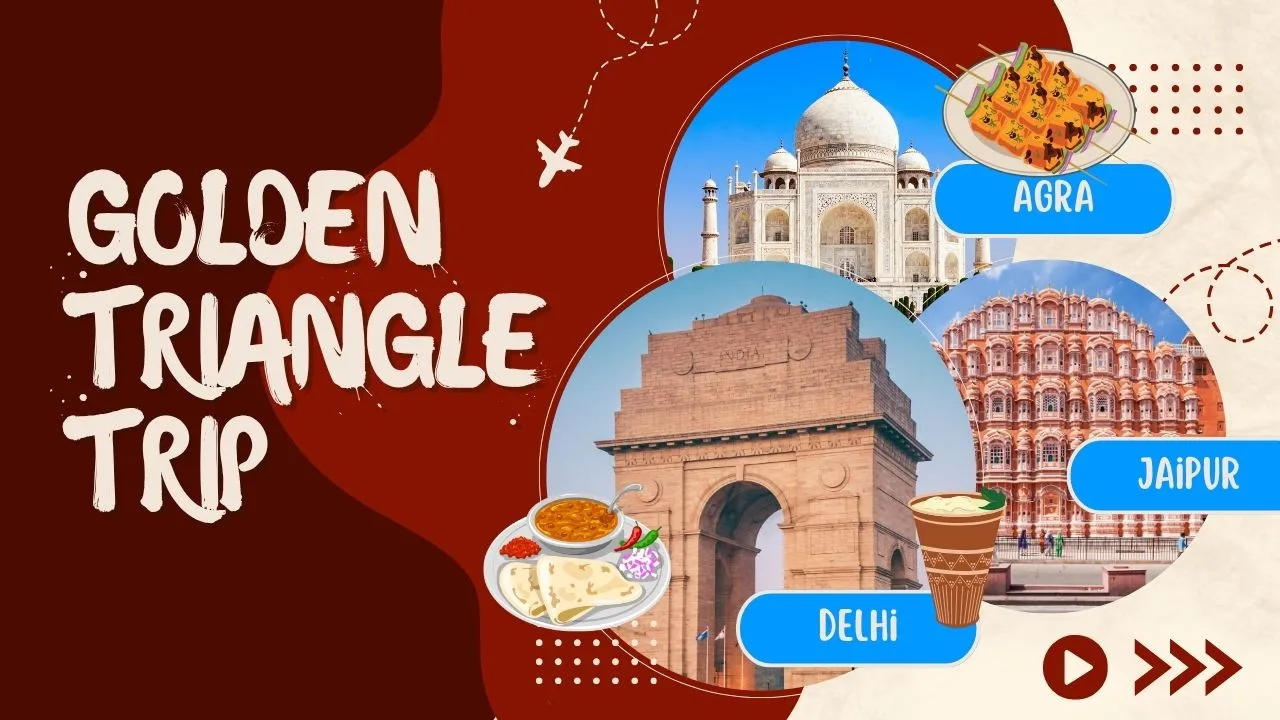
If you're planning your first trip to India, chances are someone has already told you to look into the Golden Triangle. And honestly, that's good advice. Delhi, Agra, and Jaipur together give you a proper taste of India's history, culture, and chaos (in the best way possible) without needing weeks of travel time. But here's the thing nobody really explains clearly enough: there isn't just one "Golden Triangle tour." There are several versions of it, and picking the right one depends entirely on how much time you have and what you actually want to see.
I've put together this guide the way I'd explain it to a friend who messaged me asking, "Okay so which Golden Triangle package should I book?" No fluff, just the real breakdown.
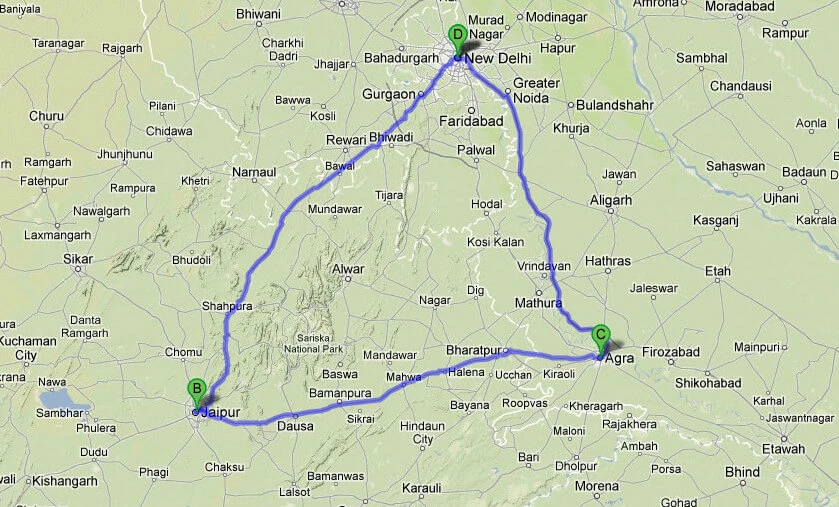
The Golden Triangle refers to three cities that form a rough triangle on the map: Delhi (the capital), Agra (home of the Taj Mahal), and Jaipur (the Pink City, full of forts and palaces). These three cities are close enough to each other that you can cover all of them in a single trip without spending half your vacation on buses or trains.
What changes between packages is the number of days, the pace, and how many extra stops get added in. Some tours are quick weekend-style trips. Others stretch out to include smaller towns, wildlife parks, or even a Ganges river town like Varanasi. Let's go through the most popular options one by one.
If you're short on time, or maybe you're just passing through India on a layover-style trip, the 3 Days Golden Triangle Tour is basically the express version. You'll typically fly into Delhi, spend a day exploring highlights like the Red Fort, Humayun's Tomb, and Qutub Minar, then head to Agra the next morning for the Taj Mahal and Agra Fort, and finish up in Jaipur before flying out or heading back.
Now, I'll be honest with you — three days is tight. You will see the big landmarks, but you won't get much breathing room. It's a "hit the highlights and move on" kind of trip. This works well for business travelers with a free weekend or people bolting the Golden Triangle onto a longer trip elsewhere in Asia. If your main goal is just saying "I saw the Taj Mahal," this package gets the job done without eating up your whole vacation.
Add just one extra day, and things get noticeably better. A 4 Day Golden Triangle Tour India usually gives you a full day in each city, plus a bit more flexibility for the drive between Agra and Jaipur, which passes through Fatehpur Sikri — an abandoned Mughal city that's honestly worth the stop.
This is a nice middle-ground option. You're not rushing quite as much, and you actually get to enjoy a sunset over the Taj Mahal or wander through Jaipur's markets without watching the clock every five minutes. If you're someone who wants a taste of India without committing an entire week, this is probably the sweet spot.
This is, in my opinion, the most balanced option out there, and it's why the 5 Day Golden Triangle Tour India remains one of the most booked itineraries by international travelers. The extra day usually gets added to Jaipur or occasionally used as a buffer day in Delhi, which honestly makes a big difference.
Why does that extra day matter so much? Because Jaipur isn't a city you want to rush. Between Amber Fort, Nahargarh Fort, the City Palace, Jantar Mantar, and the local bazaars where you can actually shop for textiles and jewelry without feeling rushed, one day just isn't enough. A 5-day version gives you room to actually enjoy the experience instead of just photographing it and moving on.
Families, retirees, and first-time visitors to India tend to gravitate toward this package because it strikes that balance between "seeing everything important" and "not being completely exhausted by the end of it."
If you've got a full week to spare, the Golden Triangle Tour 7 Days package opens things up quite a bit. This version often includes additional destinations beyond just the three core cities. Common add-ons include:
A 7-day trip lets you slow down. You're not sprinting between monuments anymore. You get actual downtime, maybe a cooking class in Jaipur, a camel safari near Pushkar, or a quiet morning boat ride if Varanasi is included. This is the package I'd recommend for people who genuinely want to understand India a bit more, not just check landmarks off a list.
Here's a simple way to think about it. Ask yourself these three questions:
How many vacation days do you actually have? Be realistic. If you only have a long weekend, don't try to force a 7-day itinerary into it. You'll end up exhausted and rushed.
Do you want a fast overview or a deeper experience? The 3 and 4 day tours are great for hitting highlights. The 5 and 7 day tours let you actually absorb what you're seeing.
Is wildlife or smaller-town culture important to you? If seeing a tiger in Ranthambore sounds appealing, or you're curious about smaller Rajasthani towns, lean toward the 7-day version.
There's no single "best" Golden Triangle package that works for everyone. It really comes down to your timeline and travel style. If you're squeezed for time, the 3-day trip gets the essentials done. If you want a relaxed but complete experience, the 4 or 5 day versions hit that balance nicely. And if you've got a full week and want to go beyond just the big three cities, the 7-day tour gives you a much richer picture of India.
Whichever one you choose, you're in for an unforgettable trip. The Taj Mahal at sunrise, the forts of Jaipur, the noisy charm of Delhi's old markets — this trio has a way of staying with you long after you've flown home.
Most first-timers do well with the 5 Day Golden Triangle Tour India. It gives enough time to explore each city properly without feeling rushed or dragging the trip out too long.
Yes, it's possible, and plenty of travelers do it. Just know that it'll be fast-paced, with less free time to relax or explore beyond the main landmarks.
October through March is ideal. The weather is much cooler and more comfortable for sightseeing compared to the intense summer heat.
Many 7-day itineraries include a stop at Ranthambore National Park, which is known for tiger sightings, though this depends on the specific package you choose.
Private tours cost a bit more but give you flexibility with timing and stops. Group tours are more budget-friendly but follow a fixed schedule with less room for changes.

Your email address will not be published. Required fields are marked *
Recent Post












0 Comments