Golden Triangle Tours with Heritage Walks and Local Experiences
By Jitendra Singh 21 May 2026 9 min read
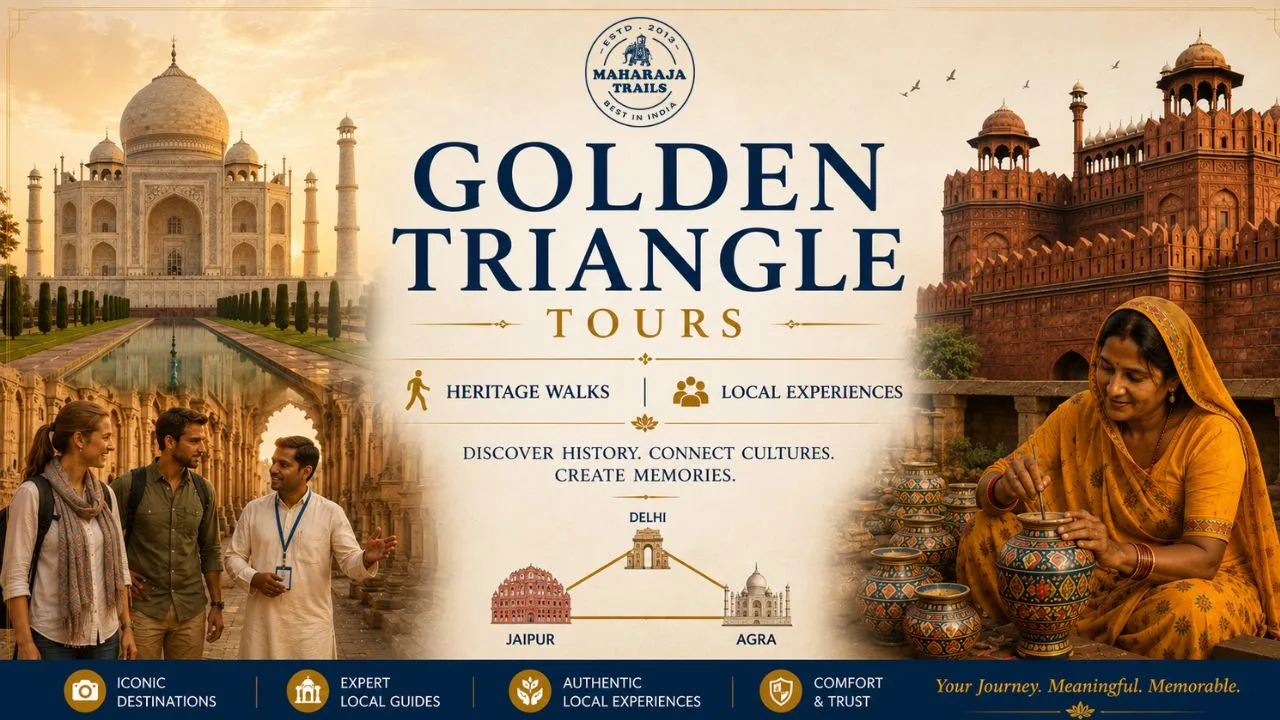
There is a specific kind of magic that happens when you first step out into the streets of India. It is a sensory overload in the best possible way—the aroma of roasting spices drifting through the air, the distant chime of temple bells, the kaleidoscope of bright textiles, and the constant, rhythmic hum of daily life.
For decades, the classic introduction to this beautiful chaos has been India’s Golden Triangle. Connecting the national capital of Delhi, the Mughal stronghold of Agra, and the royal Rajasthani capital of Jaipur, this geographic triangle forms the bedrock of North Indian tourism.
But here is a little secret from someone who has walked these roads dozens of times: if you only see India through the windows of an air-conditioned tour bus, moving from one ticket counter to the next, you are missing its heartbeat. Monuments tell us how kings lived centuries ago, but the local experiences and heritage walks tell us how India lives today.
By choosing an immersive Delhi Agra Jaipur tour package, you can easily turn a standard holiday into a deeply personal journey. Let’s dive into what makes this slow, experiential approach to the Golden Triangle so incredibly unforgettable.
Why the "Slow Travel" Approach Changes Everything
When travelers look for the best golden triangle tour packages, they are often bombarded with itineraries promising to show them "three cities in four days." It sounds efficient, but it leaves you exhausted and culturally disconnected.
When you intentionally infuse your trip with guided heritage walks and neighborhood experiences, the entire pace shifts. You stop being a mere observer and start participating. Instead of just photographing a temple, you understand the rituals inside it. Instead of just buying a souvenir, you sit on a woven mat and watch the artisan whose family has practiced that exact craft for five generations.
For those who want comfort blended with this raw authenticity, booking a boutique itinerary through a specialized agency like Maharaja Trails can provide the perfect balance. You get to retreat to a beautiful heritage palace or a five-star hotel at night, but your daytime hours are spent deep in the living culture of the subcontinent.
Choosing a personalized, luxury golden triangle tour means you don't just see the sights—you get custom access to local historians, old-city food walks, and private craft workshops that standard commercial tours entirely overlook.
Delhi: Stepping Through Layered Centuries
Most journeys begin in Delhi. It is a massive, sprawling metropolis that can feel incredibly daunting at first glance. However, Delhi is actually a collection of eight historic cities built on top of one another. The contrast between Old and New Delhi is staggering, and the best way to bridge that gap is on foot.
The Chaos and Soul of Old Delhi
You cannot say you have experienced Delhi until you have navigated the labyrinthine alleyways of Shahjahanabad, now known as Old Delhi. A heritage walk through Chandni Chowk is an absolute must.
Imagine walking through a street completely dedicated to wedding garlands, turning a corner into a market that has sold nothing but wholesale spices since the 17th century, and then looking up to see the majestic minarets of the Jama Masjid.
The Local Experience: Trade the walking shoes for a brief, exhilarating cycle-rickshaw ride through Ballimaran, an old neighborhood famous for its historic mansions (havelis) and traditional optics shops.
The Flavor: Stop at a tiny, century-old stall to sample hot, crispy jalebis (sweet fried batter) or authentic chaat (savory street snacks) from vendors who have fed generations of locals.
The Hidden Peace of Sufi Shrines
Away from the commercial rush lies Nizamuddin Basti, a medieval village tucked inside modern New Delhi. Taking a guided evening walk here feels like stepping back in time. The air smells of crushed rose petals and incense.
The true highlight here is sitting in the courtyard of the Nizamuddin Dargah (shrine) to listen to live Qawwali—devotional Sufi music. As the music swells and the crowd sways, the chaotic energy of Delhi transforms into something deeply spiritual and peaceful.
Agra: Beyond the White Marble
Agra is world-famous for one obvious reason: the Taj Mahal. And yes, seeing that white marble monument catch the first golden rays of sunrise is a bucket-list moment that genuinely lives up to the hype. But Agra has a tendency to be treated as a quick checklist stop. If you stick around and look closer, the city has incredible stories to tell.
Walking the Mughal Heritage Trail
Just across the Yamuna River, opposite the Taj Mahal, lies the Kachhpura village. A youth-led heritage walk through this rural settlement offers a perspective of Agra that very few international tourists ever see.
Local guides from the community take you through the village, showing you traditional central-courtyard homes, ancient wells, and the lesser-known Humayun Mosque. The walk concludes on the riverbank with a spectacular, crowd-free view of the Taj Mahal across the water. The funds raised from these walks go directly back into village sanitation and education programs, making it a wonderful way to practice sustainable tourism.
Meeting the Keepers of Pietra Dura
The intricate floral stone inlay work you see on the walls of the Taj Mahal is called Pietra Dura (or Parchin Kari). It didn't vanish with the Mughals.
An authentic local experience in Agra involves visiting the workshops of the descendants of those original royal artisans. Watching them shape semi-precious stones like lapis lazuli, malachite, and jasper on hand-operated emery wheels, then seamlessly fit them into marble grooves, gives you a profound appreciation for the human skill behind India's monuments.
Jaipur: Royalty, Color, and Living Traditions
Jaipur, the capital of Rajasthan, is a feast for the eyes. Painted pink in 1876 to welcome Britain's Prince Albert, the old walled city is a masterclass in early urban planning and Rajput architecture. While the Amber Fort and Hawa Mahal (Palace of Winds) are stunning, Jaipur’s true magic is found inside its historic artisanal quarters.
A Walk with the Artisans of the Old City
The historic markets of Jaipur are divided into specific zones based on traditional professions. A curated heritage walk through the inner lanes of Johari Bazaar and Gopalji ka Rasta allows you to see these communities at work.
You can watch the Meenakari (enamel work) artists painting delicate designs on gold jewelry, or the Thatheras hammering sheets of brass and copper into beautiful water vessels. The sights, the rhythmic sounds of craftsmanship, and the vivid colors of the turbans worn by the elders make you feel like you are walking through a living museum.
Hands-On Block Printing in Bagru
If you love textiles, take a short drive outside the city to the village of Bagru, famous for its traditional wooden block printing using natural vegetable dyes.
Instead of just buying a scarf from a boutique, you can spend an afternoon with a master printer. You will get your hands dirty learning how to mix the mud-resist paste, stamp the hand-carved teak blocks perfectly in line, and dip the fabric into deep vats of indigo. Taking home a piece of fabric you printed yourself is infinitely more valuable than any store-bought souvenir.
Read also: https://www.maharajatrails.com/unseen-rajasthan-in-monsoon-a-journey-through-hidden-beauty
How to Choose and Plan Your Journey
When you are looking to book your trip, keep these practical tips in mind to ensure you get an authentic, well-paced experience:
Prioritize Local Guides: Look for tours that hire hyper-local, licensed guides who grew up in the specific neighborhoods you are exploring. Their personal anecdotes are always better than memorized textbook facts.
Watch the Season: The absolute best time to undertake heritage walks in North India is between October and March, when the daytime weather is pleasantly cool and perfect for walking.
Balance Your Schedule: Don't overpack your days. Plan a major monument visit in the cooler morning hours, rest during the afternoon heat, and head out for a neighborhood walk or local interaction in the late afternoon.
Conclusion
The Golden Triangle is an undeniable masterpiece of world travel. But its true beauty isn't just held within the sandstone walls of the Red Fort or the symmetry of the Taj Mahal. It is found in the shared smiles over a steaming clay cup of masala chai, the pride of an artisan showing you their craft, and the quiet magic of a hidden alleyway that hasn't changed in three hundred years.
When you look for your best golden triangle tour packages, choose the one that slows down. Give yourself the time to walk the streets, talk to the people, and let India tell you its stories face-to-face.
Frequently Asked Questions
1. Are heritage walks in crowded areas like Old Delhi safe for international travelers?
Yes, they are highly safe, especially when done with a reputable local guide. These historic areas are busy and bustling, but the locals are incredibly welcoming. A guide helps you navigate the crowded lanes easily, handles the logistics, and ensures you don't get lost while pointing out hidden architectural gems you would completely miss on your own.
2. How much walking is actually involved in these heritage experiences?
Most curated heritage walks are very manageable, usually covering between 1.5 to 3 kilometers (approx. 1 to 2 miles) over the course of 2 to 3 hours. The pace is generally slow, with plenty of stops along the way to look at buildings, chat with artisans, or sit down for a quick refreshment. It is always a good idea to wear comfortable, broken-in walking shoes and dress modestly to respect local customs, especially when visiting religious sites.
3. Can a luxury golden triangle tour include these raw, local experiences?
Absolutely! In fact, the finest luxury golden triangle tour options are defined by these highly exclusive, experiential activities. Luxury travel today is less about gold faucets and more about private access. A premium itinerary can easily arrange private cooking masterclasses with royal descendants, after-hours museum entries, or exclusive walks led by local historians and curators, all while ensuring you travel in premium comfort.
4. What is the ideal number of days required for an experiential Golden Triangle tour?
While a rushed sightseeing trip can be completed in 4 or 5 days, an experiential tour that includes heritage walks, village visits, and hands-on workshops really requires 6 to 8 days. This gives you a solid two to three days in each city, allowing you to see the iconic sights in the mornings without missing out on the magical, spontaneous local experiences in the evenings.
Jitendra Singh - Maharaja Trails
Maharaja Trails travel experts share authentic travel guides, itineraries and insider tips for exploring India including Delhi, Agra, Jaipur and the Golden Triangle. Our goal is to help travellers experience India's culture, history and heritage in the best possible way.
0 Comments
Leave a Reply
Your email address will not be published. Required fields are marked *