Unseen Rajasthan in Monsoon – A Journey Through Hidden Beauty
By Jitendra Singh 19 May 2026 9 min read
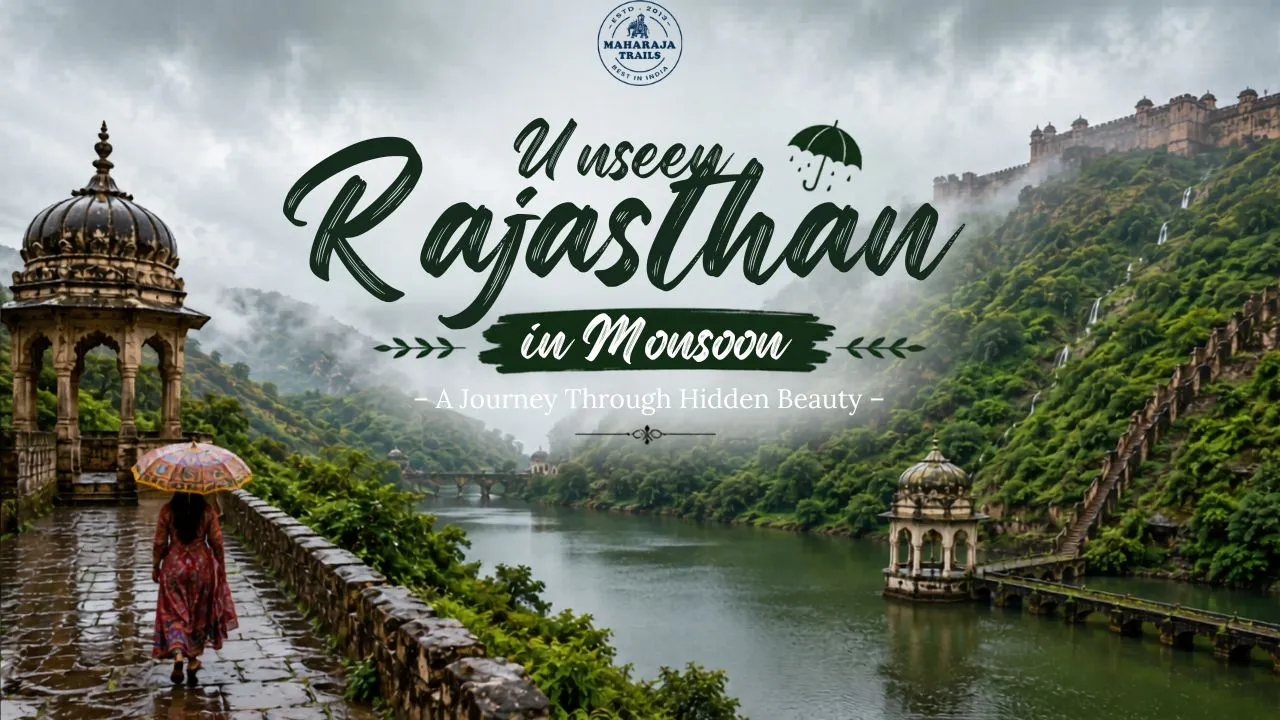
When most people think of Rajasthan, their minds instantly drift to images of sun-kissed sand dunes, camel caravans walking across the Thar, and grand palaces shimmering under a brilliant, scorching sun. It’s the classic postcard view of India’s desert state. But if you only visit during the dry winter months, you are missing out on one of the best-kept secrets of the subcontinent: Rajasthan during the monsoon.
From July to September, a dramatic transformation takes place. The arid landscapes shed their dusty brown coats and put on a vibrant, velvety green avatar. The air turns cool and crisp, ancient hill forts get wrapped in layers of dramatic grey mist, and dried-up riverbeds transform into gushing waterfalls.
For international travelers looking for an authentic, crowd-free, and deeply romantic experience, a monsoon trip here is an absolute game-changer. Let's step off the beaten track and explore the unseen, rain-washed side of this royal land.
Why the Monsoon is Rajasthan’s Best-Kept Secret
Traveling to India during the rainy season often gets a bad reputation, with visions of flooded city streets and endless downpours. However, Rajasthan is geographically unique. Because it sits on the edge of the desert, it doesn't usually experience the relentless, days-long torrential rains seen in the south or east of India. Instead, you get refreshing, sporadic showers that instantly cool down the atmosphere, followed by beautiful, moody skies that are a dream for photography.
Visiting at this time means you get to experience the grandeur of the heritage properties without the overwhelming winter crowds. The popular monuments are quiet, the locals have more time to chat, and the luxury boutique hotels offer incredible value. If you look at standard Rajasthan tour packages, they often emphasize the winter months, but booking a customized Rajasthan tour during the monsoon allows you to see a poetic, softer side of the state that most tourists completely miss.
The Emerald Forts: Kumbhalgarh and the Aravalli Range
The Great Wall of India in the Clouds
Most travelers know about the famous Amber Fort in Jaipur or the Lake Palace in Udaipur. But if you want to experience true monsoon magic, head deep into the Aravalli hills to Kumbhalgarh Fort. This UNESCO World Heritage site boasts the second-longest continuous wall in the world, stretching over 36 kilometers across rugged mountain ridges.
During the winter, the surrounding landscape looks dry and rocky. But come monsoon, the entire wildlife sanctuary encircling the fort erupts into a dense, emerald-green jungle. When you stand on the highest ramparts of the fort—aptly named Badal Mahal or the Palace of Clouds—you are quite literally standing inside the clouds. The mist rolls over the ancient stone battlements, creating an atmosphere that feels straight out of an epic fantasy movie.
Trekking the Green Valleys
The foothills around Kumbhalgarh and nearby Ranakpur (famous for its mind-bogglingly intricate 15th-century marble Jain Temple) become a paradise for hikers. The deciduous forests come alive, seasonal streams start to gurgle, and you might even spot local wildlife like leopards, antelopes, and peacocks dancing in the rain. Walking through these historic trails with a local guide offers a profound connection to nature that you simply cannot get during the hot summer months.
Bundi: The Fairytale Blue Town That Thrives in Rain
If you want to escape the tourist trail entirely, make a stop at Bundi. Tucked away in a narrow gorge in the Hadoti region, Bundi is a small, captive town that feels frozen in time. Like Jodhpur, Bundi is filled with traditional houses painted in striking shades of Brahmin blue. When the raindrops fall on these old structures, the colors deepen and glisten under the cloudy skies.
The Mystique of Taragarh Fort
Overlooking the town is the crumbling, atmospheric Taragarh Fort. Unlike heavily restored monuments, Taragarh has a wild, overgrown charm. During the monsoon, moss covers the ancient stone carvings, and wild vines creep up the walls. Inside the adjacent Garh Palace, you can marvel at the Chitrashala—an open gallery filled with spectacular, centuries-old miniature paintings that have retained their vibrant blues and greens. Looking out from the palace balconies over the rain-soaked, blue-hued town below is an unforgettable sight.
The Brimming Stepwells
Bundi is also known as the city of stepwells (baoris). These architectural wonders were built centuries ago for water harvesting and social gatherings. While they look structural and dry most of the year, the monsoon fills these deep, symmetrical stepwells with fresh water, bringing their intricate carvings of deities and elephants to life in the most dramatic way.
Hidden Waterfalls and Canyons: The Kota and Menal Circuit
Yes, you read that correctly—Rajasthan has spectacular waterfalls and deep river canyons. You just have to know where to look.
The Thunderous Falls of Menal
Located on the highway between Bundi and Udaipur, Menal is an architectural and natural wonder that truly shines only in the monsoon. Here, a complex of beautifully carved 11th-century stone Shiva temples sits right on the edge of a massive, 100-meter-deep granite gorge. When the rains arrive, a seasonal river plunges over the cliff right next to the temples, creating a thunderous waterfall that echoes through the ancient stone courtyards. It’s a jaw-dropping sight that shatters every stereotype of Rajasthan being a dry desert.
The Dramatic Horseshoe Bend of Garadia Mahadev
A short drive from the city of Kota brings you to Garadia Mahadev, a viewpoint that will take your breath away. Here, the pristine Chambal River cuts through a massive plateau, taking a sharp, monumental U-turn inside a deep, rocky canyon.
During the rainy season, the sheer cliffs turn green, the river takes on a beautiful aqua hue, and dozens of tiny, temporary waterfalls cascade down the rocky canyon walls. Standing at the cliff-edge shrine dedicated to Lord Shiva, watching the clouds float across the massive canyon, you will feel completely detached from the hustle and bustle of modern life.
Banswara: The Offbeat "City of a Hundred Islands"
For the ultimate off-the-beaten-path monsoon experience, journey to the southernmost tip of Rajasthan to a region called Banswara. Completely ignored by mainstream tourism, Banswara is locally known as the "City of a Hundred Islands."
Because of the massive Mahi River dam built in the area, the surrounding landscape is flooded with water bodies, creating countless tiny, verdant islands scattered across the vast reservoir. During the monsoon, the entire region looks more like Kerala or a tropical landscape than North India. Bamboo forests flourish, rolling hills turn a brilliant green, and local tribal communities celebrate the season with traditional music and harvest rituals. It’s a completely unseen side of the state that offers absolute solitude and pristine natural beauty.
Practical Tips for Your Monsoon Journey
To ensure your rainy-season adventure across Rajasthan is comfortable and magical, keep these practical insider tips in mind:
- Pack the Right Footwear: You will be climbing stone steps, exploring old forts, and walking on wet trails. Leave the flip-flops behind and pack sturdy, waterproof shoes or sandals with a great grip.
- Embrace Flexibility: Monsoon showers in Rajasthan are usually short but can be intense. Keep your daily schedule flexible. If it starts to pour, use it as a perfect excuse to duck into a roadside heritage café for a hot cup of Masala Chai and fresh, crispy pyaz kachoris (onion fritters)—a classic local monsoon tradition.
- Mosquito Protection: With the rains come green landscapes, and with green landscapes come insects. Always carry a good quality mosquito repellent, especially when visiting forested areas like Kumbhalgarh or Sariska.
- Coordinate with Experts: While traveling independently is possible, tailoring your itinerary with experienced boutique operators ensures a smooth journey. A dedicated specialist agency like Maharaja Trails can design a personalized route for you, providing a private, air-conditioned vehicle and local drivers who know exactly which rural roads are both safe and exceptionally scenic during the rainy season.
Conclusion
Rajasthan is a land of deep contrasts, a place where history isn't just kept in museums but lived out in the very stones of its towns and villages. While the golden sands of the winter desert will always hold a certain classic charm, there is an undeniable, poetic soul to the state that only reveals itself when the clouds roll in.
The mist hanging over the grand ramparts of Kumbhalgarh, the raindrops rippling across the ancient stepwells of Bundi, and the roaring waterfalls of Menal all tell a story of a resilient land celebrating the gift of rain. It is a journey that promises fewer tourists, intimate cultural encounters, and landscapes that will challenge everything you thought you knew about India's royal state.
So, when planning your next great escape, step away from the conventional winter travel brochures. Choose a monsoon Rajasthan tour customized by local destination experts like Maharaja Trails, pack your camera and an umbrella, and come discover a hidden, emerald paradise that few eyes have ever been lucky enough to see.
Frequently Asked Questions
1. Is it safe to travel to Rajasthan during the monsoon season?
Yes, it is very safe. Rajasthan receives far less rainfall compared to coastal or hilly states in India, meaning major landslides or severe flooding are rare. The roads connecting major towns and heritage sites are generally well-maintained. However, traveling with a reliable agency like Maharaja Trails gives you the extra security of local drivers who are familiar with real-time road conditions.
2. Can I still do a desert safari in Jaisalmer during the rains?
Jaisalmer and the far western Thar desert receive very minimal rainfall even during the monsoon. While you might experience occasional overcast skies or a brief shower, camel safaris and desert camping still operate. In fact, the desert air is much cooler and more pleasant in August than it is in June or July.
3. Are the wildlife sanctuaries open in Rajasthan during the monsoon?
The core zones of major national parks like Ranthambore and Sariska are typically closed from July to September for the animal breeding season. However, the buffer zones often remain open for safaris. Furthermore, the landscapes inside the sanctuaries turn incredibly lush and beautiful, making it a fantastic time for landscape photography and birdwatching.
4. What should an international traveler pack for this trip?
Pack light, breathable cotton clothing that dries quickly. Bring a lightweight raincoat or a compact umbrella, high-grip waterproof walking shoes, sunblock (as the sun comes out between showers), and plenty of insect repellent.
5. How long should an ideal monsoon itinerary be?
To truly experience both the classic highlights and the hidden gems like Bundi, Kumbhalgarh, and the Kota canyon, an itinerary of 10 to 14 days is ideal. This allows you to travel at a relaxed pace, taking in the beautiful rain-washed countryside between destinations.
Jitendra Singh - Maharaja Trails
Maharaja Trails travel experts share authentic travel guides, itineraries and insider tips for exploring India including Delhi, Agra, Jaipur and the Golden Triangle. Our goal is to help travellers experience India's culture, history and heritage in the best possible way.
0 Comments
Leave a Reply
Your email address will not be published. Required fields are marked *