MANDAWA FORT - Rajasthan's Royal Secret Hiding in Plain Sight
By Jitendra Singh 02 Apr 2026 10 min read
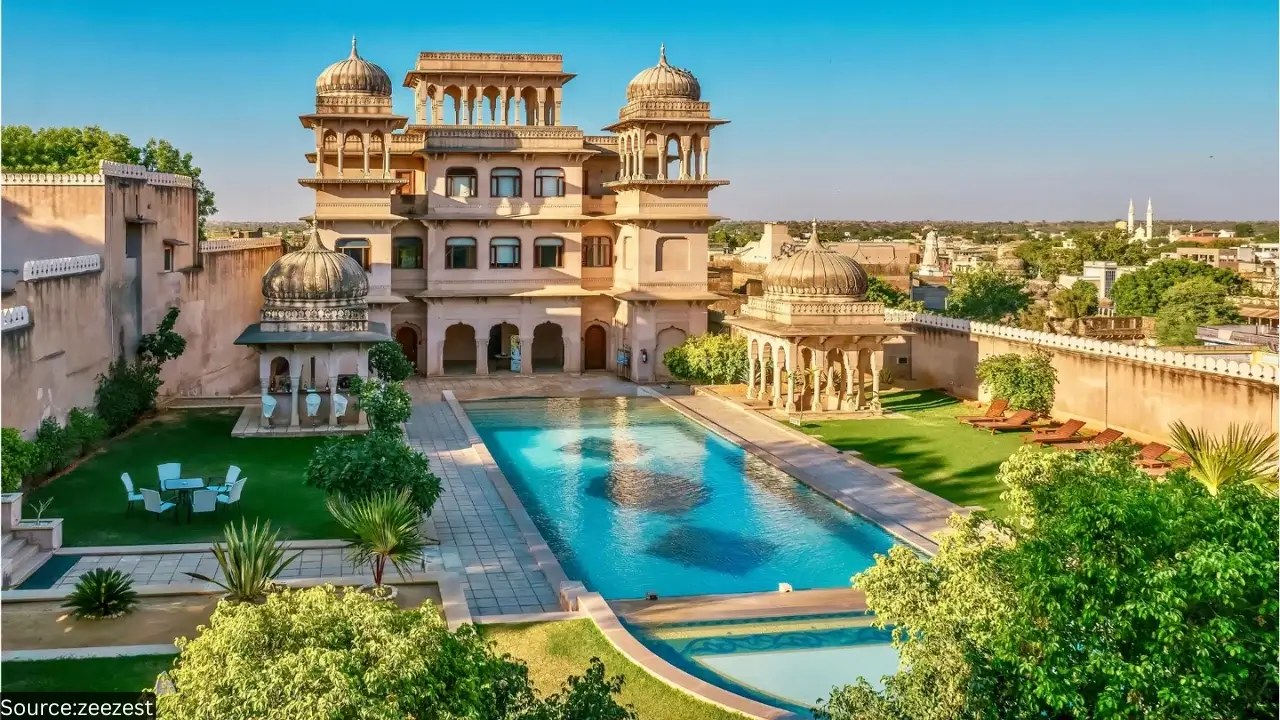
OVERVIEW
The Fort That Built a Kingdom
Picture this: you're walking through a gateway adorned with vivid paintings of Lord Krishna dancing with gopis, the golden sandstone glowing in the afternoon sun. You pass through arched corridors where centuries-old mirror work throws a thousand tiny reflections of your face. And somewhere in the distance, a Rajasthani folk singer starts his evening raga.
This isn't a museum. This is Mandawa Fort — and it's very much alive.
Tucked in the Shekhawati region of Rajasthan, roughly 260 km from Delhi and 170 km from Jaipur, Mandawa is what happens when merchant wealth, Rajput pride, and extraordinary artisans collide. The fort is the crowning jewel of a town that is quite literally an open-air art gallery — and yet, remarkably, it remains off the typical tourist radar.
|
"Mandawa is one of the most unique destinations in Rajasthan — a place where art isn't in a gallery, it IS the town." — Travel historians on Shekhawati |
A Royal History That Spans Three Centuries
The story of Mandawa Fort begins long before it was built — with the Shekhawati Rajputs, a branch of the Kachwahas who carved out their own domain in the semi-arid plains between the Aravalli hills and the Thar Desert.
Historical Timeline
18th Century - The Shekhawati region grows as a trade corridor connecting Delhi, Bikaner, and the ports of Gujarat. Wealthy Marwari merchants settle here, building grand havelis.
1755 - Thakur Nawal Singh Bahadur, a direct descendant of the Shekhawati rulers, constructs Mandawa Fort. It serves as both military stronghold and administrative heart.
Late 1700s – 1800s - Construction of the fort catalyzes rapid development. Merchants build magnificent havelis around it. Mandawa transforms into a prosperous trading post on the ancient Silk Route.
Early 1900s - Trade routes shift and merchant families migrate to Bombay and Calcutta. The havelis are gradually abandoned — but their art endures, earning Mandawa the nickname "Open Air Art Gallery of Rajasthan."
Modern Era - The Rajasthan Tourism Department and Mandawa royal family convert the fort into a heritage hotel, preserving its original character while offering guests a royal experience.
Architecture & Art: Where Every Wall Tells a Story
Mandawa Fort is not merely a structure of sandstone and lime plaster. It is a canvas. Every surface — walls, ceilings, arches, doorframes — is alive with artwork ranging from mythological epics to scenes of everyday 18th-century life.
The Painted Arched Gateway
Your journey into the fort's magic begins at the entrance. The arched gateway is adorned with elaborate frescoes of Lord Krishna tending to his cows — rendered in earthy reds, indigo blues, and leaf greens. The sheer scale and detail stops every visitor cold. This isn't decoration; it's devotion in pigment.
The Sheesh Mahal Influence
The fort's interiors draw clear inspiration from Jaipur's legendary Sheesh Mahal. Intricate mirror work covers walls and ceilings throughout several chambers, creating a dazzling play of candlelight and reflection. Walking through these rooms feels almost hallucinatory — a thousand versions of yourself in a kaleidoscope of history.
The Darbar Hall
The ceremonial Darbar Hall is where power was performed. Today, it houses an extraordinary collection of Rajputana-era antiques, armour, weapons, and paintings. The proportions are grand — high ceilings, thick walls designed to stay cool in the desert heat.
Fusion of Styles
What makes Shekhawati art so fascinating is its remarkable eclecticism. The frescoes don't just depict Hindu mythology — you'll also find British-era imagery, steam locomotives, motorcars, European figures, and even early aeroplanes, all painted by local artists who absorbed the visual culture flowing through Mandawa's trade routes.
What Makes Shekhawati Frescoes Unique?
Made with natural pigments derived from minerals, plants, and even precious stones
Applied on freshly plastered walls (fresco secco technique) — many have survived 200+ years
Subject matter ranges from Ramayana and Mahabharata to portraits of British officials
No two havelis or fort chambers share the same imagery — each was a patron's personal statement
Many frescoes incorporate gold and lapis lazuli — visible only in certain lighting
Top Things to See & Do at Mandawa Fort
Fresco Walk
Take a guided walk through the fort's painted corridors. A knowledgeable guide will decode the symbolism in each panel — transforming a pretty wall into a layered narrative.
Mirror Rooms
The fort's Sheesh Mahal-inspired chambers are a photographer's dream. Visit during midday when sunlight streams in for a jaw-dropping effect.
Darbar Hall
Browse genuine Rajputana antiques — swords, armour, ivory pieces, and royal portraits — in the grand ceremonial hall that once hosted the Thakur's court.
Rooftop Sunrise
Wake early and climb to the fort's rooftop. Watch the Rajasthan desert turn from indigo to gold as the sun rises over distant temples and cenotaphs.
Royal Dining
Dinner under the stars in the fort's courtyard, accompanied by Rajasthani folk music and traditional Marwari cuisine. This alone is worth the trip.
Haveli Town Walk
The fort is the anchor of a town full of art. Step outside and lose yourself in the painted streets of Mandawa — every alley is a gallery without admission.
Antiques & Crafts Shopping
Shop for Rajasthani miniature paintings, brass-work, tie-dye fabrics, wooden furniture, and traditional jewellery in the local bazaars. Expect to bargain!
Photography Tour
Mandawa has been a backdrop for dozens of Bollywood films. Every corner is a natural set. Bring a wide-angle lens and full memory cards.
How to Reach Mandawa Fort
Mandawa is well-connected by road and relatively accessible by rail. There is no commercial airport in the immediate vicinity, but the drive from Jaipur or Delhi is genuinely scenic.
|
From |
Mode |
Distance |
Travel Time |
Best Option |
|
Jaipur |
Road |
~167 km |
2.5 – 3 hrs |
Taxi / Self-drive via NH52 |
|
Delhi |
Road |
~260 km |
4.5 – 5.5 hrs |
Taxi or private car, NH48 → NH52 |
|
Delhi |
Train |
~260 km |
5 – 6 hrs |
Train to Jhunjhunu, then taxi (35 km) |
|
Bikaner |
Road |
~190 km |
3 – 3.5 hrs |
State highway via Fatehpur |
|
Nearest Town |
Bus |
Jhunjhunu (35 km) |
45 min |
State bus or shared jeep |
Best Time to Visit Mandawa
Mandawa sits in the semi-desert Shekhawati region, so weather is a real consideration. Here's your honest seasonal guide:
October – March (BEST SEASON)
Cool days (15–25°C), crisp mornings. Perfect for walking the havelis and rooftop evenings. February is peak — comfortable, clear skies, and Holi approaching. Book early!
April – June (Manageable)
Searing heat, up to 42°C. Only advisable if staying in the fort hotel (AC) and doing early morning/evening visits. The town is much quieter.
July – September (Mixed)
Monsoon season. Occasional showers refresh the landscape but roads can be difficult. Fewer crowds and lower prices — for the adventurous traveller.
Our recommendation: Visit between October and February for the best combination of weather, photography light, and festival atmosphere. January brings the Camel Festival; February brings Holi celebrations.
Nearby Attractions: The Shekhawati Circuit
Mandawa is your anchor, but the entire Shekhawati region rewards exploration. These are the best side trips:
Nawalgarh Havelis — ~40 km | The most dense concentration of painted havelis in Shekhawati. Aath Haveli is unmissable. Perfect half-day trip.
Dundlod Fort — ~20 km | Another Rajput fort-turned-hotel, famous for horse safaris and the ancestral Goenka Haveli nearby.
Jhunjhunu — ~35 km | District headquarters with magnificent havelis — Modi Haveli, Khetri Mahal, and a vibrant local bazaar.
Fatehpur — ~50 km | Home to the extraordinary Nadine Le Prince Cultural Centre (a restored haveli). Quieter, off-the-beaten-path.
Laxmangarh Fort — ~60 km | A hilltop fort commanding sweeping views. Small town, authentic market, far fewer tourists.
Sikar — ~90 km | Larger town with impressive havelis and a colourful bazaar offering traditional Rajasthani daily life.
Frequently Asked Questions
Q: What is Mandawa Fort famous for?
Mandawa Fort is famous for its exquisite Shekhawati-style frescoes, intricate mirror work, and its unique status as both a historical monument and a functioning luxury heritage hotel. The fort's painted arched gateway, Darbar Hall full of Rajputana antiques, and Sheesh Mahal-inspired mirror chambers are its most celebrated features. The surrounding town of Mandawa, known as the "Open Air Art Gallery of Rajasthan," adds enormous additional appeal.
Q: When was Mandawa Fort built and who built it?
Mandawa Fort was built in 1755 by Thakur Nawal Singh Bahadur, a direct descendant of the Shekhawati Rajput rulers. Its construction served as a catalyst for the growth of Mandawa town, attracting wealthy Marwari merchants who subsequently built the famous painted havelis that surround it.
Q: Can you stay inside Mandawa Fort?
Yes! Mandawa Fort has been converted into Castle Mandawa, a luxury heritage hotel. It offers 80 uniquely themed rooms and suites — from Standard Rooms to Royal Suites — all decorated with original antiques, chandeliers, and traditional murals. Staying inside the fort is one of the most authentic royal experiences in Rajasthan.
Q: How do I get to Mandawa Fort from Jaipur?
Mandawa is approximately 167 km from Jaipur, making it a comfortable 2.5 to 3-hour drive via NH52. The most convenient option is to hire a taxi or drive yourself. The nearest major railhead is Jhunjhunu (35 km away), from which you can take a local bus or auto-rickshaw to Mandawa.
Q: What is the best time to visit Mandawa Fort?
The best time to visit is October to March when the weather is pleasant, with daytime temperatures between 15–25°C. February is particularly ideal — clear skies, comfortable temperatures, and the Holi festival approaching. Avoid April–June as temperatures can exceed 40°C.
Q: Is Mandawa Fort worth visiting for just one day?
Yes, one full day is enough to see Mandawa Fort and explore the painted havelis of the town. However, we strongly recommend at least one overnight stay at Castle Mandawa — the rooftop sunrise, courtyard dinner with folk music, and unhurried evening fresco walks are experiences a day trip simply can't capture.
Q: What are the entry timings and ticket price for Mandawa Fort?
Since Mandawa Fort operates as a heritage hotel, general public entry is available during daytime hours, typically 9 AM to 6 PM, with a nominal entry fee (usually Rs. 100–200 for non-guests). However, pricing and policies can change — always verify directly with Castle Mandawa before visiting.
Q: What other places can I visit near Mandawa Fort?
The entire Shekhawati region rewards exploration. Top nearby destinations include: Nawalgarh (40 km) for its haveli concentration; Dundlod (20 km) for horse safaris and heritage; Jhunjhunu (35 km) for dramatic havelis; and Fatehpur (50 km) for a quiet, off-the-beaten-path experience. A 2–3 day Shekhawati heritage circuit is one of Rajasthan's most rewarding travel experiences.
Q: Is Mandawa safe for solo travellers and families?
Absolutely. Mandawa is a small, welcoming town with very little tourist-related hassle by Rajasthan standards. It's excellent for families, couples, and solo travellers alike. The Heritage Hotel setting means security is good, local shopkeepers are accustomed to tourists, and the town is compact enough to navigate confidently on foot.
Q: Has Mandawa Fort been used as a Bollywood film location?
Yes! Mandawa and its fort have served as shooting locations for several Bollywood films, attracted by the town's cinematic painted streetscapes and the fort's dramatic architecture. The town's picturesque havelis, narrow lanes, and golden sandstone palette make it a natural film set.
Ready to Step Into 300 Years of History?
Mandawa Fort isn't a checkbox on a tourist itinerary. It's a place that changes how you see Rajasthan — and perhaps how you see art. Plan your trip. Go soon. Before the secret gets out entirely.
Jitendra Singh - Maharaja Trails
Maharaja Trails travel experts share authentic travel guides, itineraries and insider tips for exploring India including Delhi, Agra, Jaipur and the Golden Triangle. Our goal is to help travellers experience India's culture, history and heritage in the best possible way.
0 Comments
Leave a Reply
Your email address will not be published. Required fields are marked *