
There’s a particular kind of freedom that comes with having a private car and an experienced driver waiting for you every morning. No wrestling with bus schedules, no haggling at taxi stands, no missed trains. Just you, the open highway, and the slow, unhurried pleasure of watching India reveal itself through a window. That’s exactly what a Golden Triangle Tour by Car and Driver feels like — and it’s honestly the best way most travelers will ever experience this part of the country.
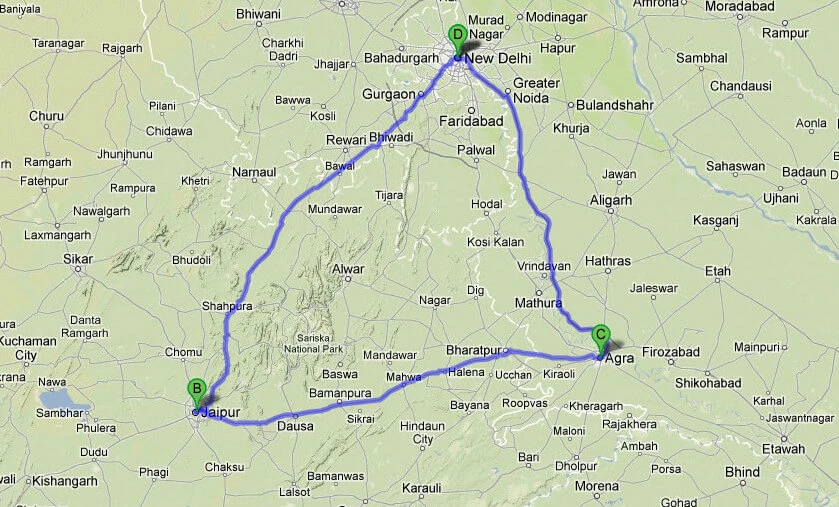
The Golden Triangle is the name given to the roughly triangular route connecting three of India’s most storied cities: Delhi, Agra, and Jaipur. Together, these destinations carry the weight of empires — Mughal grandeur, Rajputana pride, and colonial-era layering all folded into one circuit of about 720 kilometers. For first-time visitors and returning travelers alike, this route delivers the kind of experiences that end up in letters home and stay lodged in memory for years afterward.
Let’s be straightforward: India is not always the easiest country to navigate independently. That’s not a criticism — it’s simply a reality that any seasoned traveler will acknowledge. Roads shift, signage can be inconsistent, traffic in major cities is a world unto itself, and getting from one attraction to another without local knowledge can eat up hours of a trip you’d rather spend actually seeing things.
Opting for India by Car and Driver sidesteps almost all of that friction. A good driver — and the best ones on this circuit know these roads like the backs of their hands — becomes something between a logistics coordinator, a cultural translator, and a trusted companion. They know which side gate at the Taj Mahal has a shorter line in the early morning. They know the roadside dhaba between Agra and Jaipur that serves better dal than most restaurants in the cities. They know when to talk and when to let you sit quietly and watch the landscape roll by.
Beyond the practical value, there’s a dignity to traveling this way. You move at a human pace. You stop when something catches your eye. You aren’t beholden to anyone else’s itinerary or departure time. That kind of autonomy is surprisingly rare in group travel, and once you’ve experienced it, it’s hard to go back.
Most Golden Triangle tours begin in Delhi, and the capital earns its place as an opener. It doesn’t ease you in gently — Delhi hits you all at once. The traffic, the street food vendors, the auto-rickshaws weaving between lanes, the call to prayer echoing over the rooftops of Old Delhi at dawn. It’s overwhelming and intoxicating in roughly equal measure.
With a driver, you move through the city’s different eras efficiently. Old Delhi — particularly the lanes around Chandni Chowk and the approach to Jama Masjid — is best experienced on foot, but having your car nearby means you’re never stranded. The Red Fort, built by Shah Jahan in the 17th century, is a natural starting point, followed by Humayun’s Tomb, which many historians consider the architectural ancestor of the Taj Mahal. In the newer parts of the city, the Qutub Minar — a soaring 73-meter minaret dating back to 1193 — stands in quiet contrast to the corporate skyline that has grown up around it.
A good driver will also steer you toward the smaller moments: the textiles market off Connaught Place, the sweet shops near Karol Bagh, the evening light on India Gate. These aren’t in any official tour guide. They’re the things that drivers know because they’ve lived here.
The drive from Delhi to Agra takes roughly three to four hours via the Yamuna Expressway, and it’s a smooth, easy highway run — one of the more comfortable stretches of road on the entire circuit. Arrive in Agra and everything is, of course, in service of one destination.
The Taj Mahal is one of those rare monuments that doesn’t disappoint in person. After all the photographs, all the reproductions, all the stories, the actual structure still manages to stop people in their tracks. The marble changes color through the day — pink at sunrise, bright white at noon, golden in the late afternoon. If you’re traveling India by Car and Driver, your driver can time your arrival for the best light without you having to stress about logistics.
Agra has more to offer than the Taj, though visitors often underestimate this. The Agra Fort, a UNESCO World Heritage Site sitting just a few kilometers away, is massive and frequently overlooked. The fort held the Mughal court for generations and contains palaces, audience halls, and towers with views across the Yamuna toward the Taj itself. Across the river, the ruined complex of Mehtab Bagh offers one of the finest views of the Taj at sunset — and it’s almost always quieter than the main complex.
Jaipur completes the triangle and does so with considerable flair. The city was planned in 1727 by Maharaja Jai Singh II — one of the earliest examples of urban grid planning on the subcontinent — and the old walled city retains the terracotta-pink wash on its buildings that gives Jaipur its famous nickname.
The Amber Fort, perched on a hillside above the city, is the kind of structure that photographers return to again and again because it photographs differently every single time. Inside, the Hall of Mirrors — Sheesh Mahal — is genuinely dazzling, its thousands of embedded mirror chips catching and scattering candlelight across stone walls. Back in the city, the City Palace complex is still partly occupied by the royal family and contains museums with an extraordinary collection of textiles, weapons, and paintings. The Hawa Mahal, or Palace of the Winds, is the most photographed facade in Rajasthan — a latticed pink sandstone screen designed so that royal women could observe street life without being seen.
Beyond monuments, Jaipur is a shopper’s city. Block-printed textiles, blue pottery, semi-precious gemstones, hand-stitched leather goods — the markets around Johari Bazaar and Bapu Bazaar are dense and rewarding. Your driver will likely know which shops are genuinely good and which are operating on commission from hotels. That kind of honest guidance is worth more than any guidebook.
Not all Car and Driver Services in India are created equal, and it’s worth taking some time before you travel to find the right operator. A few things matter more than anything else: the condition of the vehicle, the experience and temperament of the driver, and transparency around pricing.
Look for operators who are upfront about what’s included — fuel, tolls, parking fees, the driver’s overnight accommodation on multi-day tours. Ask whether the driver speaks conversational English, since communication on the road matters. Check whether the vehicle is air-conditioned and regularly serviced; on a summer trip, a functioning AC is not a luxury, it’s a necessity.
The best drivers on the Golden Triangle circuit tend to have years of experience specifically on this route. They know alternate roads when the main highway backs up, they know which petrol stations are reliable, and they understand the rhythm of a traveler who wants some silence and a traveler who wants to talk. Finding that match — between the kind of trip you want and the person you’re trusting to help you have it — is the real art of booking a Car and Driver Service in India.
There’s a temptation, particularly on a route as storied as this one, to try to see everything. Every fort, every market, every temple, every viewpoint. Resist it. The Golden Triangle rewards the traveler who allows themselves to get genuinely lost in one small corner of something — to sit in the courtyard of a haveli in Jaipur as the afternoon light shifts, or to stand at the back of Agra Fort and watch river birds wheel over the Yamuna with no particular schedule to keep.
A private Car and Driver Service in India makes that kind of unhurried travel possible in a way that group tours simply cannot. The flexibility to say “let’s come back here tomorrow” or “can we skip this one and take a longer lunch” — that’s not a small thing. That’s the difference between moving through a place and actually being in it.
India’s Golden Triangle has been traveled by millions of people. But every trip through it, done on your own terms, at your own pace, with someone who knows the roads sitting up front — that trip belongs entirely to you.
A Golden Triangle Tour by Car and Driver typically covers the three-city route of Delhi, Agra, and Jaipur with a dedicated private vehicle and an experienced driver assigned to you for the entire duration. Most packages include the car, fuel, and the driver’s services. Meals, hotel stays, and monument entry fees are usually separate unless the operator specifies otherwise. Always confirm what’s included — especially tolls, parking, and the driver’s overnight accommodation costs — before booking.
Five to seven days is the sweet spot for most travelers. This allows at least a full day in Delhi, one to two days in Agra (which gives you time for Fatehpur Sikri and Mehtab Bagh in addition to the Taj and Agra Fort), and two days in Jaipur. Doing it in three days is possible but leaves you feeling rushed, and you’ll end up skipping the smaller moments that make the journey memorable. If your schedule allows it, seven days gives you genuine breathing room.
Yes — in fact, a private car and driver arrangement is widely considered one of the safest ways to travel the Golden Triangle, precisely because you’re not relying on public transportation or anonymous taxis. Reputable Car and Driver Services in India vet their drivers carefully, and the driver who travels with you is accountable to the company throughout. Solo travelers, couples, families with children, and older visitors all regularly choose this mode of travel for exactly this reason.
Most reputable operators offer a choice of vehicles depending on your group size and budget. For solo travelers or couples, a sedan like the Toyota Etios or similar is common and comfortable. Families or small groups typically opt for an SUV or a larger vehicle like the Toyota Innova, which offers more luggage space and a more comfortable ride on longer stretches. Always confirm that the vehicle is air-conditioned and relatively recent — on a summer tour, this matters a great deal.
October through early March is the most comfortable window. Temperatures are mild, the skies are generally clear, and the light is beautiful — especially important if you’re hoping for good photographs. November and February are particularly popular months. The summer months of April through June can see temperatures exceeding 40°C in all three cities, making sightseeing genuinely uncomfortable.
Absolutely — and this is one of the primary advantages of booking India by Car and Driver rather than a fixed group tour. Most private car and driver services are fully flexible. You can add stops that interest you (Fatehpur Sikri, Bharatpur Bird Sanctuary, or Ranthambore National Park are all popular add-ons), adjust your pace in each city, shift your departure times to catch better light at monuments, or simply spend an extra morning somewhere you’ve fallen in love with.
Most drivers working with established operators on the Golden Triangle circuit speak at least conversational English — enough to navigate questions, explain directions, and handle logistics. If you want a driver who can also offer detailed cultural context and recommendations, ask specifically for this when booking. Some operators have drivers who are genuinely knowledgeable guides in their own right, while others are expert navigators who are quieter by temperament.
Costs vary significantly depending on the type of vehicle, the duration of the tour, and the operator. As a rough reference, a five-to-six day private car and driver package for the Golden Triangle circuit (vehicle and driver only, excluding hotels and meals) might range from approximately $150 to $350 USD total, though luxury vehicles and premium service providers charge considerably more. Always get a detailed quote in writing that itemizes what’s covered and what isn’t.
Tipping your driver is not mandatory but is widely practiced and genuinely appreciated. A good driver who has made your trip smoother, safer, and more enjoyable is absolutely worth tipping. A common benchmark is somewhere between 300 and 500 Indian Rupees per day of service, though many travelers round up or tip more generously if the service has been exceptional. If your driver has gone noticeably above and beyond, a more generous tip reflects that.
Yes — and in many ways it’s the ideal introduction. The Golden Triangle concentrates several of India’s most iconic monuments and city experiences into a manageable circuit, and a private Car and Driver Service in India takes most of the logistical difficulty out of the equation. Give yourself time to adjust, don’t over-schedule your first day or two, stay hydrated, and trust your driver’s recommendations. Most people who visit on this circuit leave already planning their return.
Your email address will not be published. Required fields are marked *
Recent Post











0 Comments