What to Know Before Visiting the Taj Mahal: Tickets, Timings and Etiquette
By Jitendra Singh 26 Oct 2026 13 min read
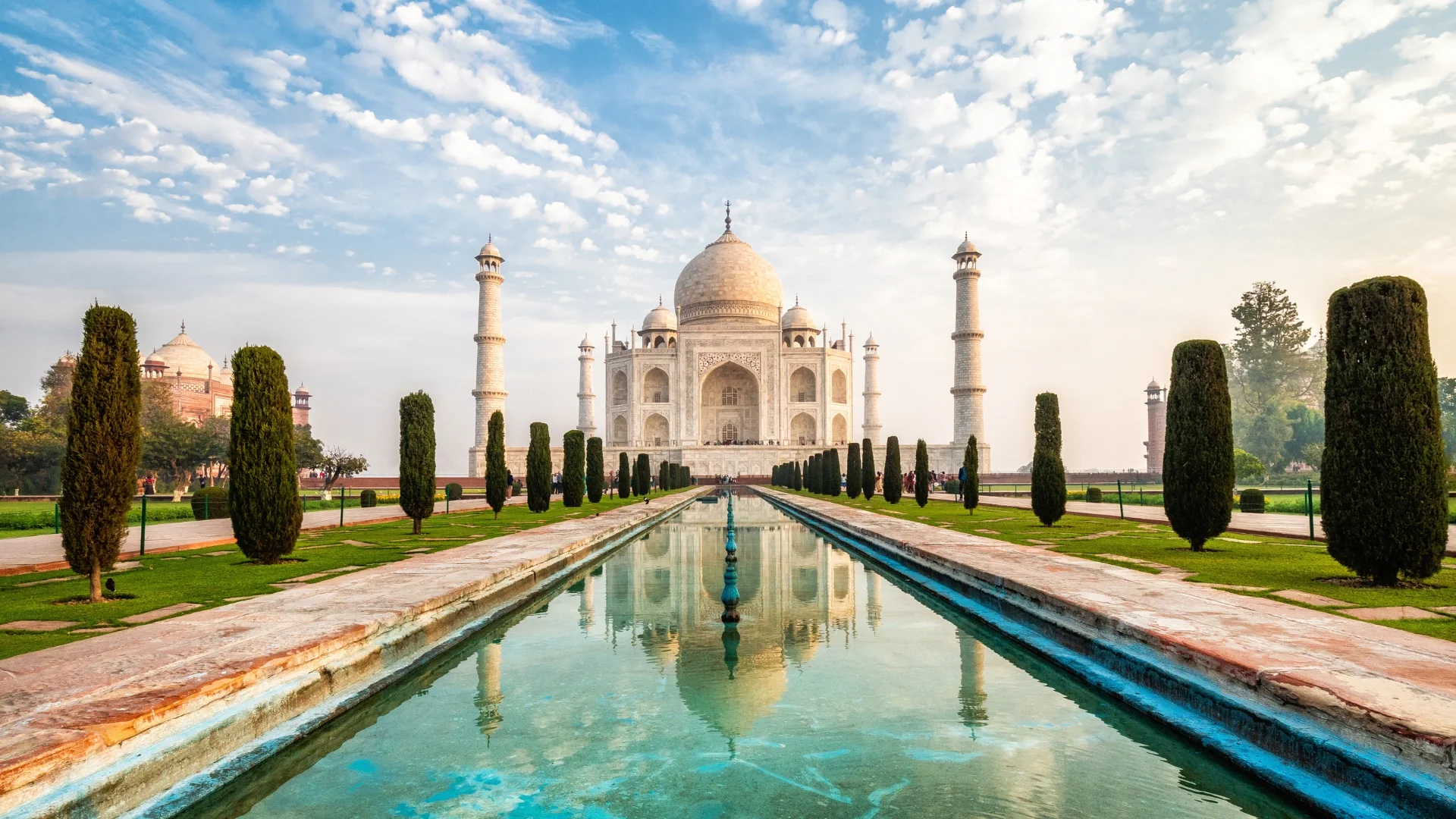
Here's what usually happens. A traveler lands in Delhi, takes a car to Agra, walks up to the gate at 10 a.m. on a Friday, and finds it locked. Or they queue for forty minutes, buy the cheaper ticket, and later realize they never saw the inside of the marble tomb. Neither mistake is rare, and both are completely avoidable.
The Taj Mahal is easy to love and surprisingly easy to get wrong. The rules are specific, the fees depend on your passport, and the difference between a quiet sunrise and a shoulder-to-shoulder midday shuffle comes down to a few decisions you make before you ever leave your hotel. This guide covers the practical side, from what you'll pay to what you can carry, and then shows how the monument fits into a bigger trip across Rajasthan.
The Taj Mahal at a Glance
Before the details, here are the facts most visitors want in the first thirty seconds.
- The monument is closed to general visitors on Fridays, apart from worshippers using the mosque on the grounds.
- Gates open about 30 minutes before sunrise and close about 30 minutes before sunset, so the hours shift with the seasons.
- Foreign visitors pay ?1,100 for the complex, plus an optional ?200 to step inside the main tomb.
- Children under 15 enter free.
- Plan on two to three hours on site if you want to see it without rushing.
Fees and hours are set by the Archaeological Survey of India (ASI) and can change, so confirm the latest numbers on the official ASI site before you pay anyone.
Ticket Costs: What You Will Actually Pay
The Taj Mahal ticket price depends on who you are. Foreign nationals pay the most, citizens of SAARC and BIMSTEC countries pay a middle rate, and Indian citizens and OCI cardholders pay the least. Every category has the same two parts: a base entry for the grounds and an optional add-on for the tomb itself.
|
Visitor type |
Base entry |
Main tomb add-on |
Total with tomb |
|
Foreign national |
1,100 |
200 |
1,300 (about $15–16) |
|
SAARC / BIMSTEC citizen |
540 |
200 |
740 |
|
Indian citizen / OCI holder |
50 |
200 |
250 |
|
Child under 15 |
Free |
Free |
Free |
Dollar figures are approximate and move with the exchange rate.
If you're wondering about the Taj Mahal entry fee for foreigners versus what locals pay, the gap is wide on purpose. Revenue from international tickets helps fund conservation, and the monument needs it. White marble at this scale takes constant cleaning, and air pollution along the Yamuna is not kind to it.
Now the part people skip. The Taj Mahal mausoleum ticket is the ?200 add-on, and I'd tell almost everyone to buy it. Inside, you see the cenotaphs of Mumtaz Mahal and Shah Jahan, the delicate inlay work, and an octagonal marble lattice screen carved so finely it looks like lace. You can't photograph the interior, but the hush and the light are worth the money by themselves. The real tombs sit in a lower chamber that's closed to visitors.
How to buy without wasting your morning
Online Taj Mahal ticket booking through the official ASI portal is the smartest route. Foreign visitors get a ?50 discount per ticket, you skip the cash counter, and you can keep the e-ticket on your phone. If you'd rather buy on site, tickets are sold at the West and East gates, each with separate lines for foreign and domestic visitors. At present the South Gate works as an exit only.
A quick tip from experience: the East Gate is usually calmer than the West, which takes the bulk of tour groups. Use the one that matches where your driver can drop you without a long walk.
Opening Hours and the Best Moment to Go
The Taj Mahal timings follow the sun rather than the clock, which is why you'll see different hours quoted online. As a rule, you can enter from half an hour before sunrise until half an hour before sunset. Ticket counters stop selling a little earlier than the gates close, so arriving at the last minute is a gamble.
And remember that the Taj Mahal is closed on Friday for general sightseeing. If your itinerary has you in Agra on a Friday, use that day for the fort, Itmad-ud-Daulah, or the Mehtab Bagh viewpoint instead, and move the main event to Saturday morning.
Which time slot suits you?
|
Time slot |
Crowds |
Light and heat |
Best for |
|
Sunrise |
Moderate, thinning by 8 a.m. |
Soft pink-gold, cool |
Photography, a calm walk, first-timers |
|
Midday |
Heaviest |
Harsh, hot in summer |
Only if your schedule forces it |
|
Late afternoon |
Easing off |
Warm, golden hour near closing |
Families and slower travelers |
|
Full-moon night |
Capped, small batches |
Moonlit marble, very quiet |
A rare, memorable second visit |
A Taj Mahal sunrise tour is what I recommend to anyone with flexibility. The marble shifts from gray to peach to white over about an hour, and the central pathway is far less crowded than it will be by ten. Get in line before the gates open, and head straight to the main platform first so the busy photo spots don't slow you down later.
For something different, Taj Mahal night viewing is offered on five evenings around each full moon, excluding Fridays and the month of Ramadan. Visitors enter in small timed groups for roughly half an hour, and tickets are bought a day ahead from the ASI office in Agra, not at the gate. Foreign visitors pay a higher rate than the day ticket, so check the current price and the exact dates with ASI before you plan around it. Clouds can spoil it, so keep it flexible.
Choosing the Right Season
The best time to visit Taj Mahal is October through March, when days are mild and the sky is mostly clear. December and January bring dense morning fog that can hide the monument completely until nine or ten, so don't count on a perfect sunrise photo then. April through June is punishing, with temperatures that regularly pass 105°F (40°C), but crowds are lighter and you can still manage with an early start. During the monsoon, July through September, expect humidity and sudden rain, though the gardens are lush and the hotels are cheaper.
Etiquette, Dress and Rules Worth Knowing
The Taj Mahal is a tomb and a working place of prayer, not only a photo backdrop. Security is tight, so a little preparation saves frustration.
- Taj Mahal dress code: there's no official uniform, but cover your shoulders and knees. Light cotton works better than anything tight or sheer, and sunscreen and a hat help in the garden.
- Taj Mahal photography rules: photos are fine across the grounds and on the platform, but not inside the tomb chamber. Tripods, drones, and professional lighting gear are not allowed.
- Prohibited items: food, tobacco, lighters, sharp objects, and large bags are turned away at security. Carry a small bag and leave the rest in your car or hotel.
- Footwear: you'll walk on the marble platform in shoe covers or barefoot. Foreign tickets typically come with covers, but bring socks if you dislike hot stone.
- Behavior: keep your voice low near the tomb, don't climb on railings, and wait your turn at the famous central bench instead of pushing in for a photo.
- Vehicles: gasoline and diesel vehicles are kept away from the monument to protect the marble, so expect a short ride on an electric shuttle or a walk from the parking area.
As for a Taj Mahal guide, hire one with an official ASI-approved ID card and agree on the price before you start. A good guide explains the calligraphy, the symmetry, and the optical tricks in the minarets that the signage doesn't. A bad one pushes you toward shops, so ask for a named person in advance.
Getting to Agra Without the Stress
Many travelers ask how to reach Taj Mahal from Delhi, and there are three sensible answers. A private car on the Yamuna Expressway covers about 230 km in roughly three to three and a half hours, and it's the most flexible choice. Fast trains such as the Gatimaan Express and Vande Bharat take around two hours and are comfortable and punctual, though you'll still need a pickup in Agra.
Stay overnight in Agra if you can. A same-day dash from Delhi puts you at the monument in the worst light.
What Else Is Worth Your Time in Agra
Agra Fort is the other essential stop. Its red sandstone walls hold the palace rooms where Shah Jahan spent his last years, and one window looks straight across the river to the Taj. Plan about two hours. Mehtab Bagh, the garden across the Yamuna, gives you a calm view of the monument from behind, especially good near sunset, and foreign entry costs around ?300. For Mughal architecture on a smaller, more intimate scale, Itmad-ud-Daulah is a quiet stop, and many people call it the draft for the Taj. Finally, Fatehpur Sikri, about 40 km away, is an abandoned red sandstone capital that fits neatly into the drive toward Jaipur.
Turning the Taj Mahal into a Full Rajasthan Trip
Most first-time visitors pair Agra with Delhi and Jaipur, which is why a Delhi Agra Jaipur tour is the most booked route in India. The loop is roughly 750 km and mixes Mughal monuments, Rajput palaces, and street food. The big question is how many days to give it, and the honest answer depends on your pace and how much you want to see.
|
Duration |
Route |
Who it suits |
|
3 days |
Delhi, Agra, Jaipur |
Short layovers and tight schedules |
|
4 days |
Delhi, Agra, Fatehpur Sikri, Jaipur |
First-timers who want a steady pace |
|
5 days |
Delhi, Agra, Jaipur with a full day in each |
Most travelers; the sweet spot |
|
6 days |
Adds a village stay or Pushkar |
Culture lovers and photographers |
|
7 days |
Adds Ranthambore or Udaipur |
Wildlife fans and slow travelers |
A Golden Triangle tour 3 days itinerary is a sprint. You'll see the Taj Mahal at sunrise on day two, then drive to Jaipur for the Amber Fort and City Palace. It works if you're short on time, but you'll spend a lot of it in the car.
With a Golden Triangle tour 4 days plan, you gain space for a stop at Fatehpur Sikri and one relaxed evening in Old Delhi. It's the minimum I'd suggest for anyone who dislikes feeling hurried.
A Golden Triangle tour 5 days schedule is the one I'd put most people on. You get a proper day in Delhi, a sunrise and a fort in Agra, and a full day in Jaipur for Hawa Mahal, the bazaars, and a sunset at Nahargarh.
Stretch it to Golden Triangle tour 6 days and you can add a night in a heritage haveli or the pilgrim town of Pushkar, which changes the mood of the whole trip.
The Golden Triangle tour 7 days option adds Ranthambore National Park for a tiger safari or a flight-free extension to Udaipur's lakes. Choose this one if you want the trip to feel like a journey rather than a checklist.
Whichever length you pick, a good Golden Triangle tour package should include a private driver, hotels near the sights, an ASI-approved guide, and pre-booked Taj tickets. A well-built India Golden Triangle itinerary also accounts for Friday's closure by reordering the days, something generic packages often miss.
Mistakes That Cost Visitors Time and Money
- Arriving on a Friday and realizing the gates are shut.
- Skipping the tomb add-on to save ?200, then regretting it on the spot.
- Buying from unofficial websites or touts who add a markup.
- Visiting at noon in summer and spending half the time looking for shade.
- Packing a large backpack or a tripod, then losing twenty minutes at the security check.
Plan It With Someone Who Does This Every Week
Reading a guide gets you most of the way. The last stretch is the part where local knowledge matters: which hotel has a rooftop view of the dome, which driver actually shows up at 5 a.m., and how to shuffle your days around a Friday closure or a fog forecast. A travel consultant who plans Agra and Rajasthan trips daily can sort that out in one conversation.
If you're building a trip around the Taj Mahal, talk to a specialist before you book flights. Share your dates, your group size, and how much you want to see, and ask for a custom plan with transparent pricing and no surprise add-ons. Send an inquiry through our contact form, or ask for a free itinerary review, and we'll map out the days that fit your budget and pace.
Frequently Asked Questions
1. Is the Taj Mahal open every day of the week?
No. It's closed to general visitors on Fridays, although worshippers can use the mosque. It's open the other six days, from roughly 30 minutes before sunrise until about 30 minutes before sunset.
2. How long does a Taj Mahal visit take?
Plan on two to three hours. That covers security, the gardens, the tomb interior, the side mosque, and photos. Linger, and it stretches to four.
3. Is the tomb ticket really worth ?200?
Yes, for most people. Inside you'll see the cenotaphs, the inlay, and the marble screen up close. Photography isn't allowed there, so be present rather than behind a phone.
4. Can I leave and re-enter on the same ticket?
Generally no. Once you walk out through the exit, you're done, so finish your photos and any restroom stops before you leave.
5. Do children need a ticket?
Children under 15 enter free at the gate. Carry a passport copy or ID in case staff ask for age proof.
6. Can I carry a tripod, drone, or food inside?
No. Tripods, drones, food, and tobacco are not permitted. Small personal items, a water bottle, and a phone are fine. Large bags may be refused at the gate, so travel light.
7. What should I wear for a respectful visit?
Choose breathable clothes that cover shoulders and knees, plus comfortable shoes that slip off easily. A scarf is handy for sun protection and for stepping into the mosque.
8. Is night viewing available all month?
No. It's limited to five nights around the full moon, with timed batches and a capped headcount. Fridays and Ramadan are excluded, and tickets are sold a day ahead in Agra, so confirm with ASI.
9. Which gate is best for avoiding queues?
The East Gate is usually quieter than the West, which handles most tour groups. Buying an e-ticket in advance helps more than the gate choice, because you skip the cash line.
10. How many days do I need for Delhi, Agra, and Jaipur?
Five days is comfortable for most travelers. Three works only if you're short on time, and seven lets you add wildlife or a lake city without feeling rushed.
Jitendra Singh - Maharaja Trails
Maharaja Trails travel experts share authentic travel guides, itineraries and insider tips for exploring India including Delhi, Agra, Jaipur and the Golden Triangle. Our goal is to help travellers experience India's culture, history and heritage in the best possible way.
0 Comments
Leave a Reply
Your email address will not be published. Required fields are marked *