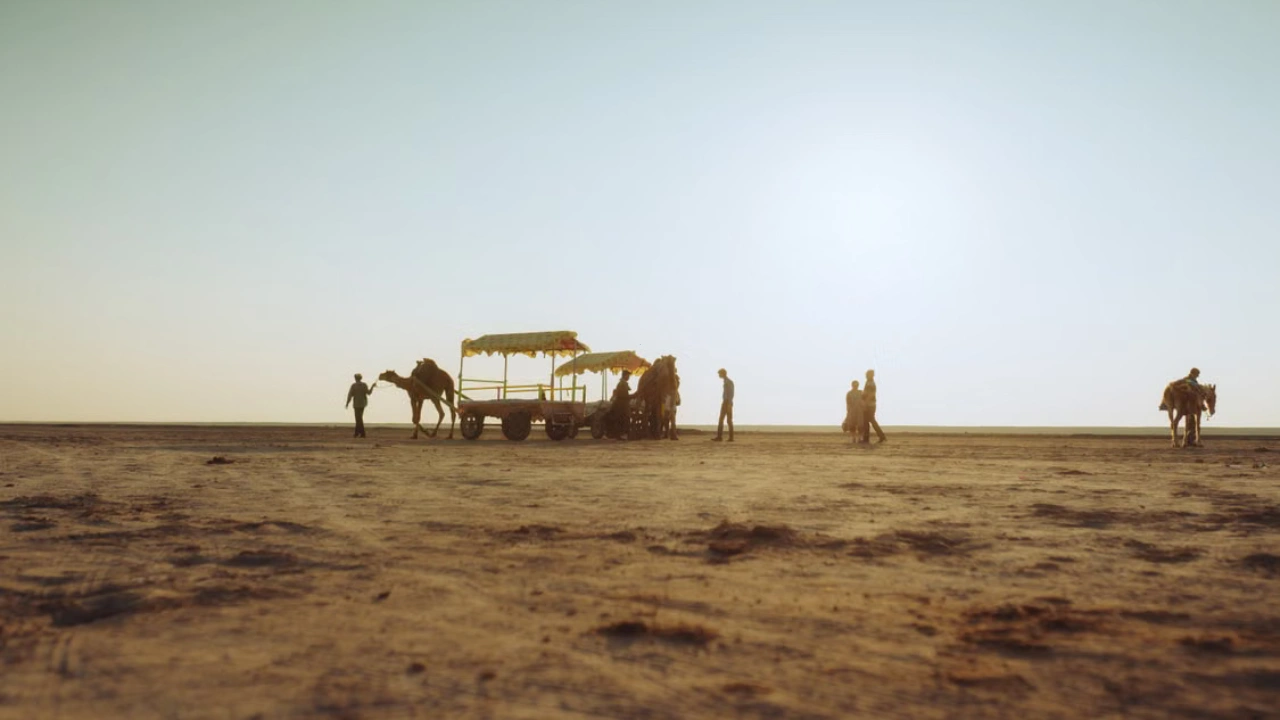
There's a particular kind of silence that only shows up in a handful of places on earth, and the Little Rann of Kutch has it in spades. I'm not talking about the absence of noise — I'm talking about a silence you can almost feel pressing against your ears while a sheet of white salt runs out to a horizon that seems to bend with the curve of the planet itself. If you've spent any time scrolling through photos of Gujarat and stumbled on images of a cracked, moonlike desert dotted with wild horses and pink flamingos, you've probably already found this place, even if you didn't know its name.
The Little Rann of Kutch, often shortened to LRK by travelers who've been a few times, sits in the Kutch district of Gujarat, in the western corner of India. It isn't a sand desert like the Thar further north. It's a seasonal salt marsh — flooded during the monsoon, then baked dry under a relentless sun until it turns into roughly 5,000 square kilometers of cracked white earth. That transformation is really the whole story of this place, and it's why no two visits ever look quite the same.
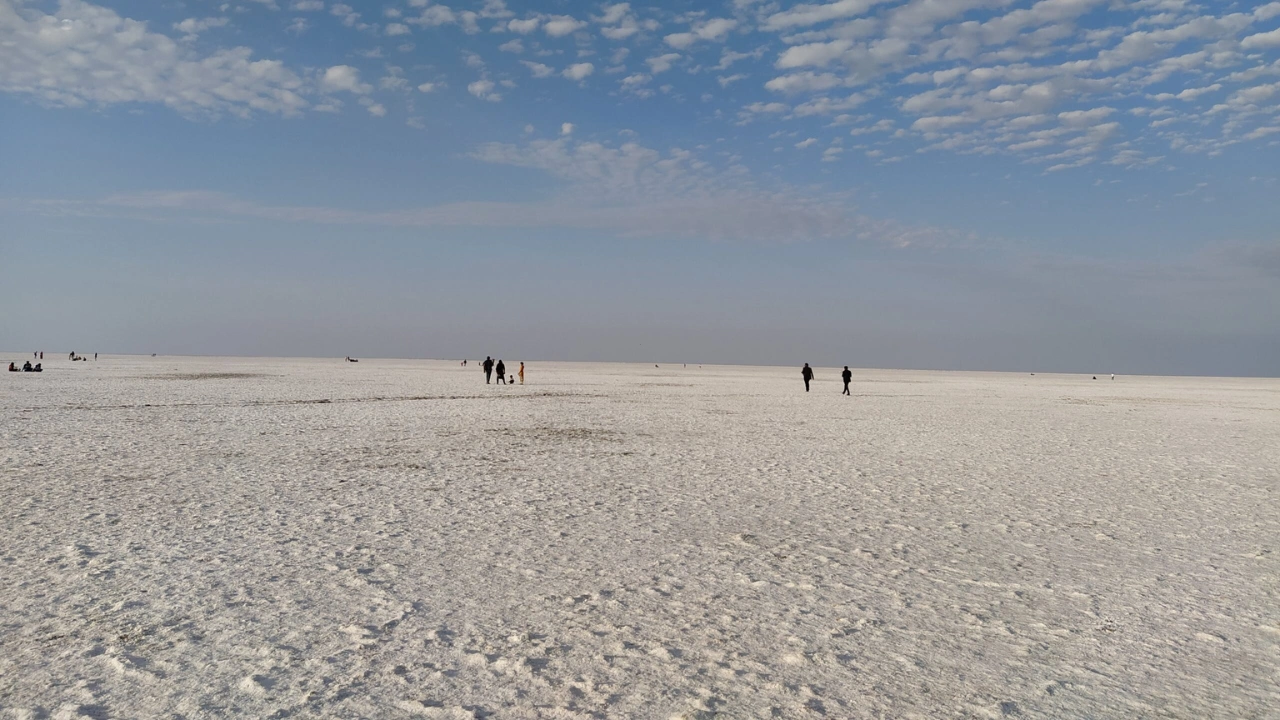
What throws most first-time visitors is how much the Rann changes across the year. During the rains, rivers from the surrounding hills empty into the low-lying basin and the whole region turns into a shallow, marshy wetland. Birds pour in from hundreds of miles away to take advantage of the water. Then, as the monsoon retreats and the heat sets back in, the water evaporates and leaves behind this thick crust of salt that eventually dries into the cracked, tile-like pattern you see in every postcard shot of the region.
By the time winter arrives, the transformation is complete. The ground crunches faintly underfoot. Heat shimmer bends the horizon into something almost liquid, even in the cooler months. And because the terrain is so flat and so open, the sky ends up doing most of the visual work — clouds, colors, and light shift by the minute in a way that photographers tend to find a little addictive.
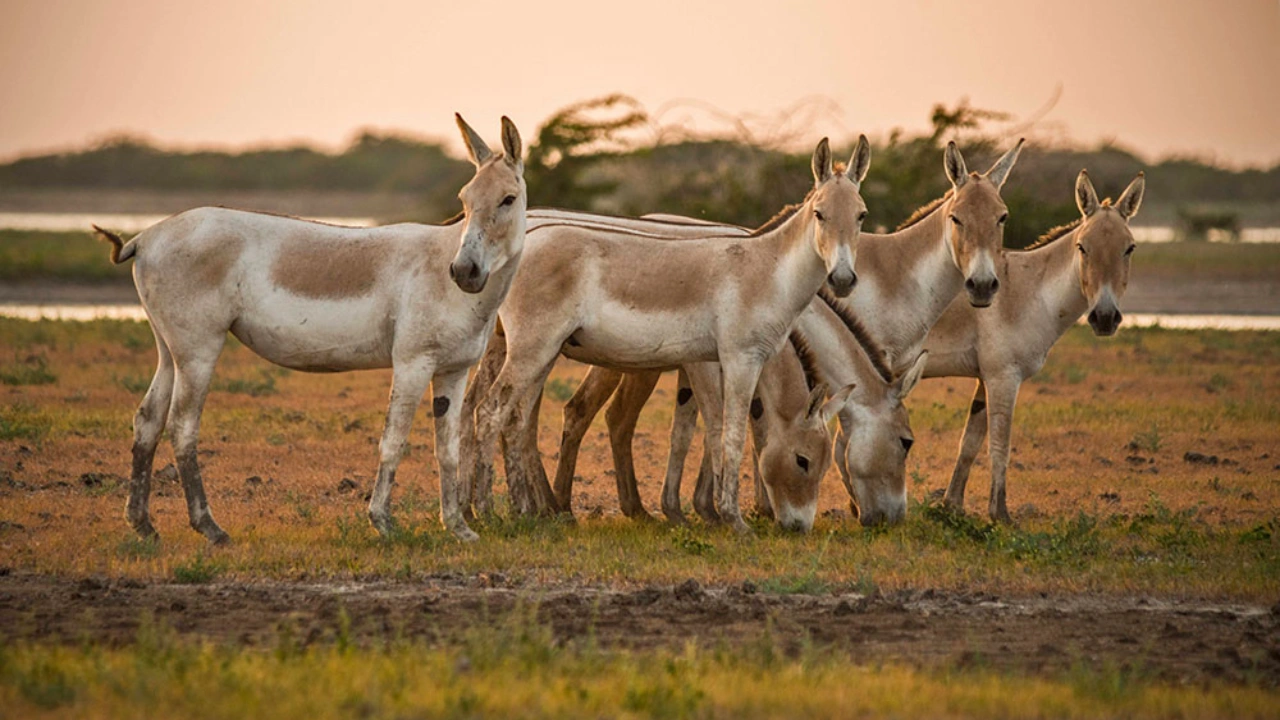
This region holds a title that a lot of visitors don't expect: it's the last wild refuge on the planet for the Indian wild ass, known locally as the khur. This isn't a domesticated animal or a close cousin of the donkeys you'd see hauling carts in nearby villages — it's a genuinely wild subspecies, fast, skittish, and built for exactly this kind of open ground. The Wild Ass Sanctuary that covers much of the Little Rann was set up specifically to protect them, and it worked well enough that their numbers have climbed steadily over the decades.
Spotting a herd is one of those travel moments that's hard to describe until you've had it. They tend to keep their distance, grazing in loose groups on the scrubby vegetation at the desert's edges, and the second a jeep gets too close, they take off in a way that looks almost choreographed — dozens of animals shifting direction together like a flock of birds rather than a herd of mammals. Beyond the wild ass, the sanctuary is also home to nilgai, chinkara gazelle, desert foxes, and — if you're lucky and patient — the occasional caracal, a wildcat that's notoriously difficult to spot anywhere in India.
But wildlife here isn't limited to what walks on four legs. Come winter, the wetlands fringing the salt flat fill with migratory birds arriving from as far as Siberia and Central Asia. Flamingos are the headline act — both greater and lesser flamingos gather in numbers large enough to turn entire stretches of shallow water pink — but pelicans, cranes, and a long list of raptors show up too, making this one of the more underrated birdwatching destinations in the country.
Timing matters a lot here, more than in most destinations. The Rann is essentially closed off by mud and standing water through the monsoon, so the real window runs from around October through March. Within that stretch, November to February is the sweet spot — daytime temperatures stay comfortable, nights turn refreshingly cool, and both the wild ass and the migratory birds are at their most visible. Visit right at the start of the season, in October or early November, and there's still a chance of catching leftover monsoon puddles, which make for a striking mix of water, salt, and cracked earth in the same frame.
Getting there usually starts with a flight into Ahmedabad, which has the nearest major airport and sits about three to four hours by road from most of the popular entry points into the Rann. Travelers coming by train typically get off at Viramgam or Dhrangadhra, both of which have decent connections and put you within striking distance of the sanctuary gates. From either point, the last stretch is almost always by road, since there's no public transport that runs directly into the salt flats themselves.
Where you sleep shapes the whole trip more than people expect. The village of Dasada, right on the edge of the sanctuary, has grown into the main base for visitors, with everything from simple homestays to well-appointed eco-resorts and safari camps. Staying here rather than commuting in from Ahmedabad each day means you can catch both sunrise and sunset out on the flats, which — as anyone who's done both will tell you — are two completely different experiences of the same place.
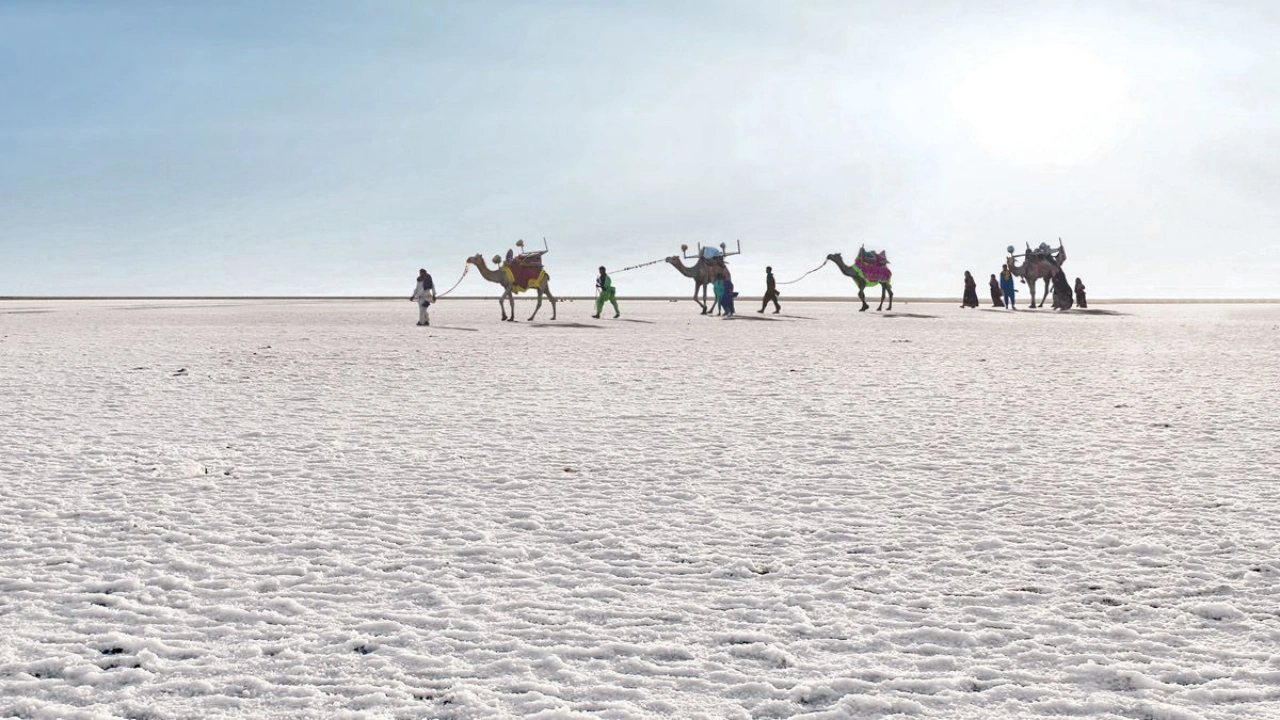
It would be a mistake to treat the Little Rann as just a backdrop for wildlife photography, because the human side of this landscape is just as compelling. The villages scattered around the salt flat's edges — places like Dasada, Bajana, and Zinzuwada — are home to communities whose lives are woven directly into the rhythm of the desert. Among them are the Agariya salt workers, families who move out onto the flats for months at a time, living in temporary huts and pulling salt from the earth under conditions that are, frankly, brutal — temperatures well past 45 degrees Celsius, with almost no shade for miles.
Away from the salt pans, the region's textile and craft traditions are hard to ignore. Vibrant embroidery, mirror work, block printing, and handwoven textiles are still produced locally, and a lot of the patterns and color choices you'll see on scarves or wall hangings trace back generations within specific communities. If you're the kind of traveler who likes bringing something tangible home, this corner of Gujarat is one of the better places in the country to do it, especially if you buy directly from artisans rather than a generic souvenir stand.
History has left its mark here too. Not far from the salt flats, the sun temple complex near Dasada and the surrounding step-wells are worth carving out an hour or two for, if only because they add a layer of depth to a trip that could otherwise be entirely about landscape and wildlife.
If there's one experience that people talk about long after they've left, it's sunset on the salt flats. As the sun drops toward the horizon, the white ground starts throwing back every shade of orange, pink, and gold the sky is producing, and because there's nothing — no trees, no buildings, no hills — to interrupt the view, the effect is almost total. The temperature drops fast once the light goes, the air turns a little sharper, and the whole desert seems to hold its breath for a few minutes before the stars take over.
Camel carts are still a common way to get out onto the flats for sunset, moving slowly enough that you actually notice the ground changing color under you as the light shifts. It's slower than a jeep, sure, but that's sort of the point — this isn't a landscape that rewards rushing.
The Little Rann of Kutch isn't a place that hands you an obvious itinerary. There's no single monument to check off, no one photo you're expected to come back with. What it offers instead is a landscape that keeps shifting — physically, seasonally, and in the stories the local communities tell about living inside it. Go for the wild asses, stay for the silence, and don't be surprised if the sunset ends up being the part you talk about the most.
What exactly is the Little Rann of Kutch, and how is it different from the Great Rann?
The Little Rann of Kutch is a seasonal salt marsh in Gujarat's Kutch district, spanning roughly 5,000 square kilometers. It's smaller and sits south and east of the more famous Great Rann of Kutch, which stretches closer to the Pakistan border and hosts the annual Rann Utsav festival. The Little Rann is quieter, less touristy, and is primarily known for the Wild Ass Sanctuary rather than large-scale cultural events.
When is the best time of year to visit for wildlife spotting?
November through February is generally considered the peak window. The weather is mild, the ground is fully dried into the classic cracked-salt landscape, and migratory birds — including flamingos, pelicans, and cranes — are present in the largest numbers. October can still work if you don't mind occasional leftover monsoon moisture in low-lying patches.
Is the Little Rann of Kutch safe for solo travelers, including women traveling alone?
Generally, yes. The area sees a steady stream of domestic and international tourists, and licensed safari operators and homestays in Dasada are accustomed to hosting solo visitors. As with any remote rural region, it's smart to arrange transport and safaris through a registered guide or resort rather than freelancing your own route across the salt flats, since the terrain can be disorienting and parts of it are ecologically protected.
Do I need a permit to enter the Wild Ass Sanctuary?
Yes. Since the sanctuary is a protected wildlife area, entry requires a permit that's arranged through the forest department, and safaris must go out with an approved local guide and vehicle. Most resorts and homestays in Dasada handle this paperwork for guests as part of booking a safari, so independent travelers rarely need to deal with the process directly.
How many days should I plan for a trip to the Little Rann of Kutch?
Two to three days is usually enough to get a proper feel for the place. That gives you time for at least two safaris — ideally one at sunrise and one at sunset, since animal activity and light conditions differ a lot between the two — plus a bit of time to explore nearby villages, craft centers, and the sun temple complex without feeling rushed.
What's the best way to get from Ahmedabad to the Little Rann of Kutch?
Most travelers hire a private car or taxi from Ahmedabad, which takes roughly three to four hours depending on the exact base village you're heading to, commonly Dasada or Zainabad. There are also train connections to nearby towns like Viramgam and Dhrangadhra, followed by a shorter road transfer, which works well if you'd rather not drive the whole distance.
Can I see flamingos in the Little Rann, and if so, when is the best window?
Yes, and it's actually one of the region's underrated highlights. Both greater and lesser flamingos gather in the wetlands around the salt flats, particularly from November into February, arriving alongside other migratory birds from Central Asia and Siberia. Sightings depend somewhat on water levels that season, so checking with local guides shortly before your trip is worth doing if flamingos are the main draw.
What kind of accommodation is available near the Rann?
Options range from simple family-run homestays to comfortable eco-resorts and tented safari camps, most of them clustered in and around Dasada. Higher-end resorts typically include guided safaris, meals, and cultural experiences like village walks or craft demonstrations as part of the stay, while homestays offer a more low-key, budget-friendly base.
Is the Little Rann of Kutch suitable for families with young children?
It can work well, especially for families interested in wildlife and open landscapes, but it's worth keeping a few things in mind. Safaris involve long stretches of bumpy travel across open terrain, temperatures can swing sharply between day and night in winter, and there isn't much in the way of typical family entertainment infrastructure. Families that enjoy slower, nature-focused travel tend to get the most out of it.
What should I pack for a trip to the salt desert?
Layers are the key word. Days can be warm and sunny, but temperatures drop noticeably after sunset, especially between December and January. Sunglasses and sunscreen are essential given the glare off the white salt, along with a hat, comfortable closed shoes for uneven cracked ground, and a good zoom lens or binoculars if wildlife and bird photography are on your list. A light jacket or shawl for early morning and evening safaris is worth the extra bag space.

Your email address will not be published. Required fields are marked *
Recent Post









0 Comments