Shopping in Jaipur: What to Buy, Where to Shop and How to Avoid Tourist Traps
By Jitendra Singh 29 Oct 2026 13 min read
Within thirty seconds of stepping out near Hawa Mahal, someone will call you "madam" or "sir," promise a special price, and steer you toward a shop that was never on your list. That moment decides how most visitors remember the city. Some fall in love with it. Others walk away feeling cheated.
Both reactions are fair. If you are hunting for the best places to shop in Jaipur, know this: the craft traditions are real, centuries old, and still practiced by families who live a few kilometers from the bazaars. But it also runs a polished tourist economy where a 600-rupee item can be quoted at 3,000.
This guide is built to help you shop the way a well-prepared local would. You will see what is actually worth carrying home, which markets suit which budget, what fair prices look like, and which common tricks to walk away from. If you would rather have a plan made for your dates and budget, the consultation section near the end explains how we can help.
How Shopping in the Pink City Actually Works
A few ground rules save you time and money before you buy anything. Most visitors learn these the hard way on day one.
- Old city bazaars generally follow Jaipur shopping timings of about 10:30 a.m. to 8 p.m., and many shops close on Sundays. Confirm with your hotel before planning a Sunday haul.
- October through March is the best time to shop in Jaipur. Summer afternoons cross 104°F (40°C), which turns bargaining into an endurance sport.
- Carry small rupee notes and a UPI-ready phone if you can. Many shops accept foreign cards, but some add a surcharge, and bargained cash prices are often lower.
What to Buy in Jaipur: The Items Worth Your Money
Not everything sold in the bazaars deserves space in your suitcase. These are the categories where Jaipur genuinely beats other Indian cities on quality, variety, or price.
1. Hand-Block-Printed Textiles
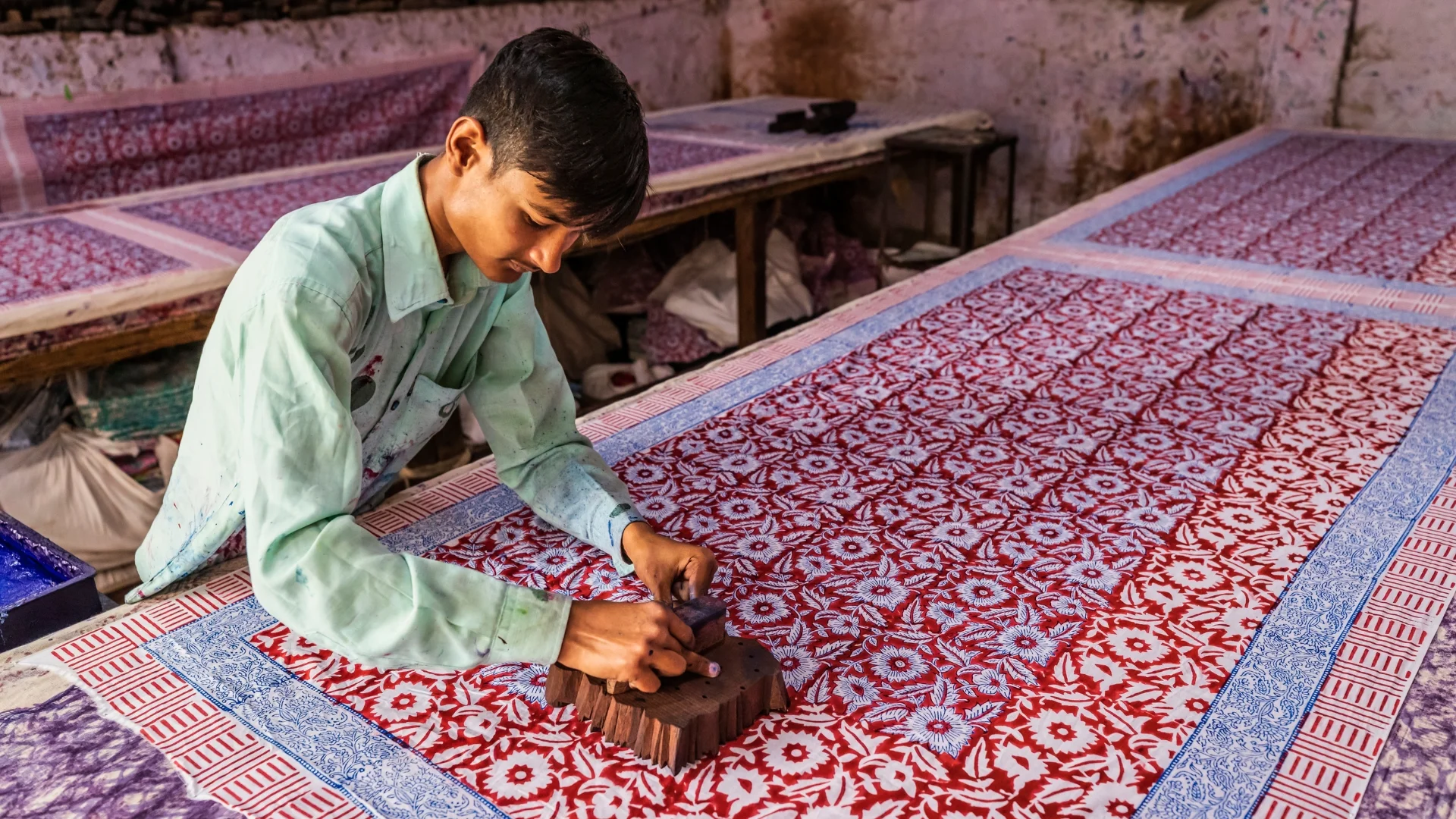
Jaipur block print is the single best buy for most travelers. Artisans press hand-carved wooden blocks dipped in dye onto cotton, one repeat at a time. The two craft villages to know are Sanganer, famous for fine floral prints on a white base, and Bagru, known for earthy dabu mud-resist work in indigo and ochre.
Start with a quick authenticity check. Real block printing shows tiny, charming misalignments between repeats, and the print is slightly visible on the reverse side. A perfectly uniform pattern with a flat, plasticky feel is usually screen-printed. Hand-printed cotton kurtas typically start around 800 to 1,500 rupees, while screen-printed lookalikes sell for roughly half. Bedsheets, table runners, and running fabric are easy to pack and make excellent gifts.
If you are wondering what to buy in Jaipur for ladies, start here: block-print kurtas, cotton dupattas, and bandhani scarves are the most practical, wearable choices.
2. Jewelry: Silver, Kundan and Meenakari
Jaipur has been a gem-cutting and jewelry center since the Mughal and Rajput courts patronized its craftsmen. For Jaipur jewelry shopping, the traditional specialties are kundan and meenakari work, where gold-foil settings meet vividly enameled backs, along with oxidized silver pieces that suit daily wear.
- Ask for a BIS hallmark on gold and a 925 stamp on sterling silver.
- Insist on an itemized bill that lists weight, metal purity, and stone details.
- Treat colored stones carefully. A shop's own certificate is not independent proof. A report from a recognized gemological laboratory is.
A word of honesty about Jaipur gemstones: the city is a genuine trading hub, which is exactly why tourists are targeted here. Buy a stone because you love how it looks, never because someone promised you could resell it at a profit. We cover that trick in the next section.
3. Jutti and Mojari Footwear
Jaipuri jutti are handcrafted leather shoes with embroidered or beaded uppers, traditionally cut flat with no left or right distinction until worn in. Good pairs feel soft, have clean stitching along the sole, and smell like real leather. Expect to pay roughly 500 to 1,500 rupees for quality pairs. Anything priced below 300 rupees is often synthetic.
4. Blue Pottery
Blue pottery is Jaipur's signature craft, and here is a fact that surprises people: it contains no clay. The body is made from quartz powder, ground glass, and a few binding agents, then fired at low temperature and hand-painted in cobalt blue, turquoise, and green. It is delicate and decorative. Tap a piece gently; a clear ring suggests no hidden cracks. Do not assume it is food safe unless the maker confirms it, and wrap it well, because breakage in transit is the most common regret.
5. Lac Bangles
Lac bangles are made from a natural resin worked over a flame, then decorated with mirror chips, glass stones, or gold-colored detailing. A set costs a few hundred rupees in most lanes, and the sellers will size them on your wrist.
6. Jaipuri Quilts
The Jaipuri razai is a featherweight cotton quilt that is startlingly warm for how little it weighs. It folds into a small bundle, which is why travelers love it. Typical prices run from roughly 1,500 to 4,000 rupees depending on fabric and fill. Squeeze it: the cotton batting should feel evenly spread, with no lumps or hard seams.
7. Art, Textile Crafts and Small Souvenirs
Among the more thoughtful Jaipur souvenirs, Rajasthani miniature paintings stand out, hand-painted with natural pigments on paper, cloth, or sometimes marble. Also look at bandhani tie-dye dupattas, brassware in Tripolia, marble inlay boxes, and Rajasthani puppets. These are budget-friendly and travel well.
Where to Shop: The Best Markets in Jaipur, Explained
The walled city is laid out as a grid of specialized bazaars, painted in the signature pink hue. Knowing which lane sells what keeps you from wandering into a generic tourist shop.
- Johari Bazaar is the center for jewelry, gems, and silver. Prices are high but the range is unmatched. Compare at least three shops before deciding.
- Bapu Bazaar is where locals buy fabric, jutti, and ready-made garments. It is a good choice for Jaipur street shopping with realistic starting quotes.
- Nehru Bazaar sits beside Bapu and offers sarees, footwear, and sweets. It is a convenient stop after Johari.
- Tripolia Bazaar is the spot for lac bangles, brass utensils, and iron crafts.
- Chandpole Bazaar is known for marble sculpture and stone carving. Shipping marble is possible but expensive, so weigh before you buy.
- Kishanpol Bazaar is excellent for bandhani and lehariya, and it has a loyal local following.
If you want guaranteed price tags, Rajasthali, the state government emporium on MI Road, and Anokhi, a respected block-print brand with several city outlets, are reliable benchmarks. For readers searching for the cheapest market in Jaipur, the honest answer is that Bapu Bazaar and Kishanpol generally offer the best value on textiles, while the Jaipur wholesale market areas near the old city suit bulk buyers and boutique owners better than casual visitors.
Market Comparison at a Glance
|
Market |
Best for |
Price level |
Bargaining room |
Watch out for |
|
Johari Bazaar |
Silver, kundan, gemstones |
High |
Moderate |
Inflated gem quotes and certificate claims |
|
Bapu Bazaar |
Fabric, jutti, kurtas |
Low to mid |
High |
Machine prints sold as hand-block |
|
Nehru Bazaar |
Sarees, footwear, sweets |
Mid |
High |
Crowds near evening hours |
|
Tripolia Bazaar |
Lac bangles, brassware |
Low to mid |
High |
Plastic bangles sold as lac |
|
Chandpole Bazaar |
Marble and stone crafts |
Mid to high |
Moderate |
Heavy items and costly shipping |
|
Kishanpol Bazaar |
Bandhani, lehariya |
Low to mid |
Moderate |
Synthetic fabric labeled as pure cotton |
Fixed-Price Stores vs. Bazaars vs. Workshops
Many travelers ask whether it is smarter to shop in a store with tags or to haggle in the lanes. Each has a place in your plan.
|
Where |
Advantage |
Risk |
Best for |
|
Fixed-price stores |
Honest tags, return policies, quality control |
Higher base prices, less variety |
Gifts, first-time buyers, benchmarking |
|
Local bazaars |
Lowest prices, widest choice, real atmosphere |
Quote inflation, mixed quality |
Textiles, jutti, bangles, small souvenirs |
|
Craft workshops |
Meet the maker, learn the process |
Hard-sell showrooms posing as workshops |
Blue pottery, block print, miniatures |
|
Street vendors |
Cheap, quick, fun |
Little recourse if quality is poor |
Snacks, scarves, trinkets |
For most visitors, the winning approach is to start at a fixed-price store, learn the benchmark price, and then enter the bazaars with that number in your head. Many fixed price shops in Jaipur also ship internationally, which can save you suitcase stress.
Tourist Traps in Jaipur and How to Avoid Them
Most shopkeepers in Jaipur are honest. The problems come from a small set of repeat patterns that target visitors who are new to the city. Here is what to recognize.
- The commission trap: Some rickshaw drivers and guides are paid a cut by shops they bring you to, and that cut is added to your price. Decide your destinations first, and politely refuse detours to "my cousin's factory."
- The gemstone scam in Jaipur: A friendly stranger says you can buy stones cheaply here and sell them at a large profit abroad, sometimes with an "export partner" waiting. This is a well-known fraud. No legitimate dealer needs a tourist to carry stones overseas. Walk away and do not hand over a card.
- Fake antiques: India's Antiquities and Art Treasures Act restricts exporting objects older than a century. A shopkeeper selling a "genuine 200-year-old" piece to a tourist is either lying about its age or risking your trouble at the airport.
- Mislabeled textiles: "Pure silk" at a suspiciously low price, or "pashmina" at 500 rupees, is almost never what it claims. Real pashmina is very expensive. Ask for fiber content in writing.
- Shipping promises: Paying a deposit for later delivery is risky. Use an insured courier, keep the tracking number, and photograph the packed item. If anything sounds vague, carry the item yourself.
- Restricted materials: Avoid anything made from ivory, coral, or animal parts, because U.S. import rules can lead to seizure at the border.
Following these Jaipur shopping tips for tourists will remove most of the risk.
Bargaining Without the Awkwardness
Haggling is expected in bazaars and unwelcome in fixed-price stores. If it feels uncomfortable, remember that the first quote is an opening move, not an insult. These bargaining tips in Jaipur work for most travelers:
- Know your benchmark price before you begin, ideally from a fixed-price store.
- Counter at about 40 to 50 percent of the first quote, then meet somewhere around 60 to 70 percent.
- Bundle two or three items from one seller to lower the price per piece.
- Be ready to leave. Walking away calmly is the strongest tool you have, and a fair seller will often call you back.
A Smart One-Day Shopping Plan
Here is a practical route that avoids backtracking and keeps your energy up. Sequencing price checks before big purchases also keeps your Jaipur shopping budget under control.
- 10:30 a.m.: Visit Rajasthali or an Anokhi outlet to learn benchmark prices.
- 12:00 p.m.: Walk Johari Bazaar for jewelry. Look, compare, and buy nothing yet.
- 3:30 p.m.: Bapu and Nehru Bazaar for textiles and jutti, which is where you can buy confidently.
- 6:00 p.m.: Tripolia for bangles, then return to Johari with your notes if you still want jewelry.
Build your Jaipur shopping list the night before, with category, target price, and a maximum. A written limit makes it far easier to resist impulse buys when a charming seller starts talking.
Plan Your Jaipur Shopping With a Local Expert
If your trip is short, if you are buying for a wedding, or if you run a boutique and want trustworthy suppliers, a few hours of expert guidance can save you far more than it costs. Our team knows which workshops are genuine, which counters offer fair weights on silver, and how to arrange safe shipping.
Book a free consultation before your trip. Tell us your dates, budget, and wish list, and we will send back a market-by-market plan with verified shops, fair price ranges, and shipping options. Message us on WhatsApp or fill out the contact form to get started.
Frequently Asked Questions
1. Is Jaipur good for shopping?
Yes. Few Indian cities offer such a concentration of handmade textiles, jewelry, pottery, and footwear in one walkable area. Quality varies by shop, so use the checks in this guide, and compare prices before you commit.
2. What is Jaipur most famous for buying?
Block-printed cotton, silver and gemstone jewelry, jutti, blue pottery, lac bangles, and lightweight quilts are the standout purchases. These are the Jaipur famous things to buy that locals and travelers return for again and again.
3. Which market is best for tourists?
Johari Bazaar suits jewelry shoppers, while Bapu and Nehru Bazaar are better for everyday textiles and footwear. First-timers should start at a fixed-price store to calibrate expectations.
4. How much should I bargain?
In bazaars, counter at roughly half the first quote and settle around two-thirds. Do not bargain at fixed-price stores. If a seller refuses to move at all, that usually signals a fair price.
5. How do I know if gemstones are genuine?
Ask for an independent laboratory report, not just the shop's paper. Pay by card so the transaction is traceable, and never buy stones as an investment. When in doubt, buy a lower-value stone you simply enjoy.
6. Are credit cards and UPI accepted?
Larger stores and many bazaar shops accept cards, and UPI is widely used. Some shops add a processing fee, so ask before paying. Keep some cash for smaller purchases and rickshaw rides.
7. Can I ship purchases home?
Yes. Reputable stores offer international courier service, which is useful for heavy items. Consider shipping from Jaipur to USA through an insured service with tracking, and keep every invoice in case of customs queries.
8. Is it safe to shop alone in Jaipur?
Generally yes, especially in daylight. Keep valuables close in crowded lanes, avoid following strangers to "special" shops, and tell your hotel where you are going if you plan a long outing.
9. How many days do I need for shopping?
One full day covers the main bazaars. Add a half day for Sanganer and Bagru if you want to see printing workshops, or if you plan to buy larger home textile quantities.
10. Can I buy wholesale as a tourist or small business?
Yes, many sellers offer better rates on larger quantities. Boutique owners benefit from a guide who can negotiate and verify quality. That is where a consultation can be genuinely useful.
Final Thoughts
Jaipur rewards shoppers who slow down. Learn the benchmark prices, check the craft with your own eyes and hands, and treat the bazaar as a conversation rather than a contest. Do that, and you will return home with pieces that carry real stories instead of regrets.
Ready to shop Jaipur with confidence? Contact us for a free consultation and get a personalized plan before you land.
Jitendra Singh - Maharaja Trails
Maharaja Trails travel experts share authentic travel guides, itineraries and insider tips for exploring India including Delhi, Agra, Jaipur and the Golden Triangle. Our goal is to help travellers experience India's culture, history and heritage in the best possible way.
0 Comments
Leave a Reply
Your email address will not be published. Required fields are marked *