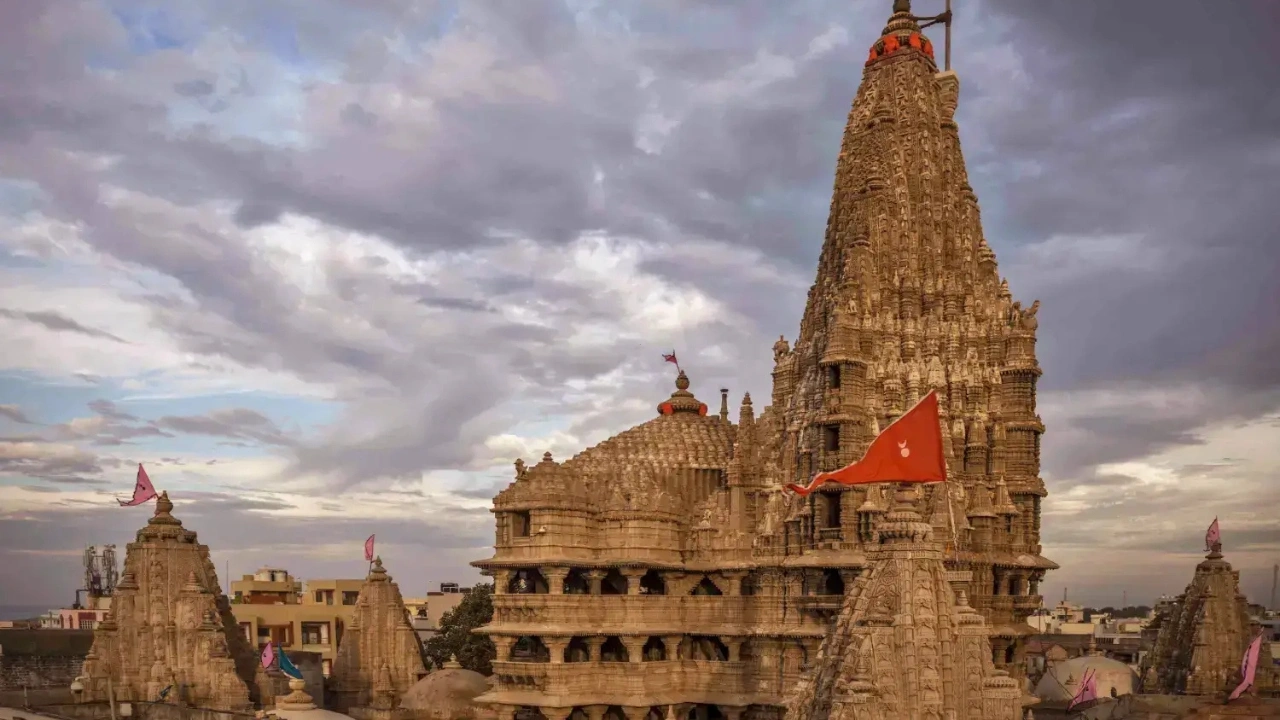
There is a particular kind of quiet that settles over you the moment you step off the train in Dwarka. Maybe it's the salt air rolling in from the Arabian Sea, or maybe it's just knowing you've arrived somewhere that people have been walking toward for thousands of years. Either way, it hits you fast.
If you've been putting together a list of places in India that actually mean something, Dwarka belongs near the top. It's one of the four sacred Char Dham sites, alongside Badrinath, Puri, and Rameshwaram, and it's tied directly to the story of Lord Krishna, who according to legend left Mathura and built his kingdom here on the western coast of Gujarat. Whatever your reason for going, whether it's faith, curiosity, or just wanting to see a coastal town that hasn't been flattened into a tourist checklist, this Dwarka travel guide will walk you through everything worth knowing before you book that ticket.
Dwarka isn't a big city, and that's part of its charm. The whole town wraps itself around a handful of temples, a busy little market, and the water. You'll notice quickly that daily life here still runs on the rhythm of pilgrimage — vendors selling prasad, families walking barefoot toward the temple gates, boats bobbing along the shoreline. It's not manufactured for visitors. It's just how the town has operated for centuries.
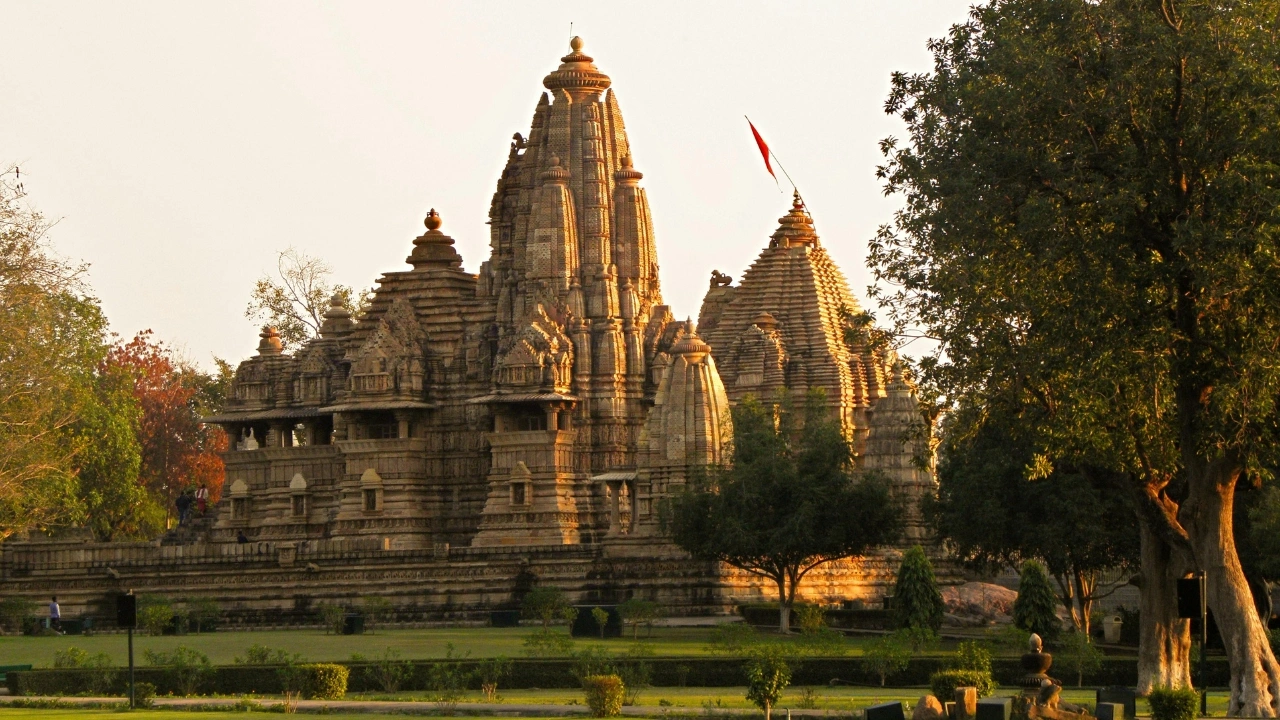
Everything in Dwarka radiates outward from the Dwarkadhish Temple, and honestly, it should. This is the main event. The temple sits right in the middle of town, hugged on all sides by a lively, slightly chaotic marketplace where you can buy everything from marigold garlands to little brass idols.
Local tradition holds that the original shrine here goes back roughly 2,500 years, said to have been built by Krishna's great-grandson, Vajranabh. The structure you'll actually walk through today has been rebuilt and restored many times over the centuries, so what stands now isn't the ancient original — but the five-story tower still manages to feel genuinely old, with detailed carvings across its walls telling stories straight out of Hindu mythology. The temple sits close to the Gomti River, and a lot of visitors like to combine their temple visit with a quiet walk or a ritual dip along the riverbank before heading in.
One heads-up: photography isn't allowed inside the main sanctum, so don't plan on getting that perfect shot in front of the deity. Save your camera for outside.
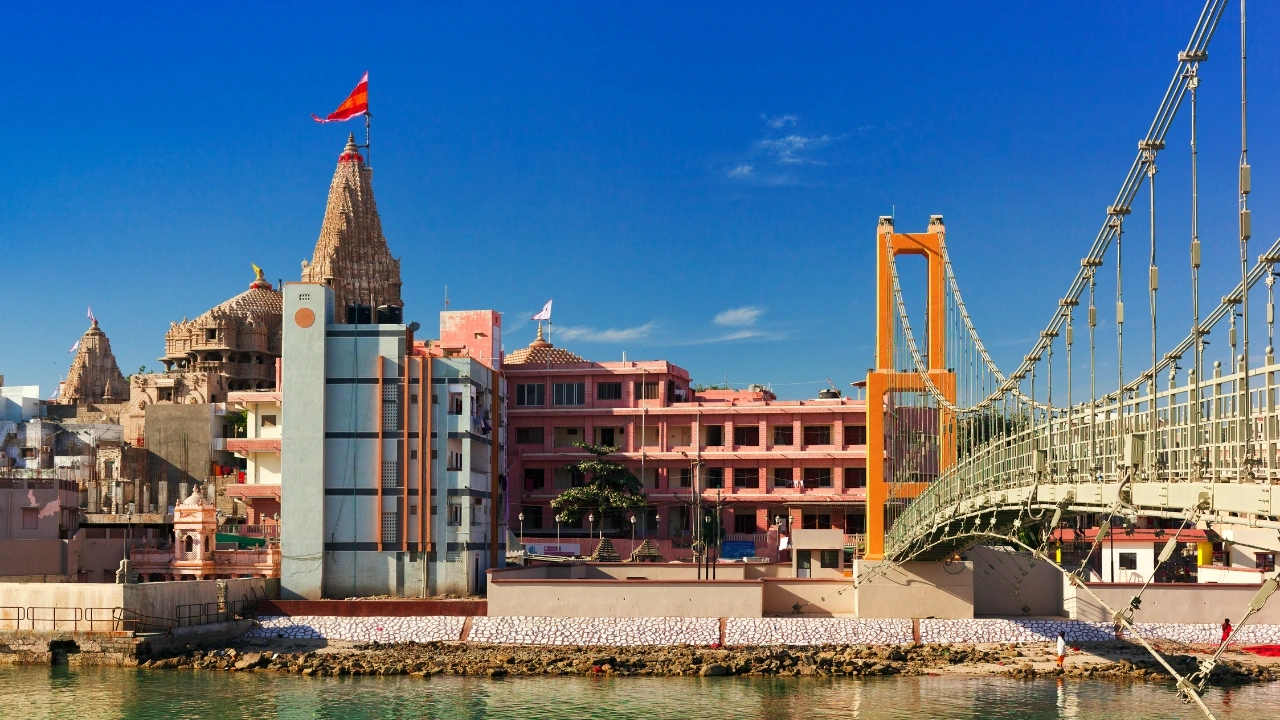
Since the inner temple is a no-camera zone, the Sudama Setu bridge becomes the unofficial photo spot for basically everyone who visits. It runs along the outer edge of the temple complex and gives you a genuinely nice view of the Gomti River, especially if you time it around sunset. The light hits the water differently in the evening, and the whole scene turns golden for about twenty minutes. There's a small fee to walk across, but it's minor and worth it just for the view alone.
If you have an extra half-day, Bet Dwarka is worth the trip. It's a small island sitting in the Arabian Sea about 30 kilometers from the main town, and the only way to reach it is by boat, which honestly adds to the experience rather than taking away from it.
Legend says this is where Krishna welcomed his childhood friend Sudama and treated him to a feast, which is a nice thing to think about while you're standing on the same shoreline centuries later. The temple here is smaller and quieter than Dwarkadhish, and the pace on the island itself is slower — fewer crowds, more open sky, a lot more sea breeze. Some locals will also tell you about ruins believed to be part of an older, submerged settlement just offshore, which adds a bit of mystery to the whole visit.
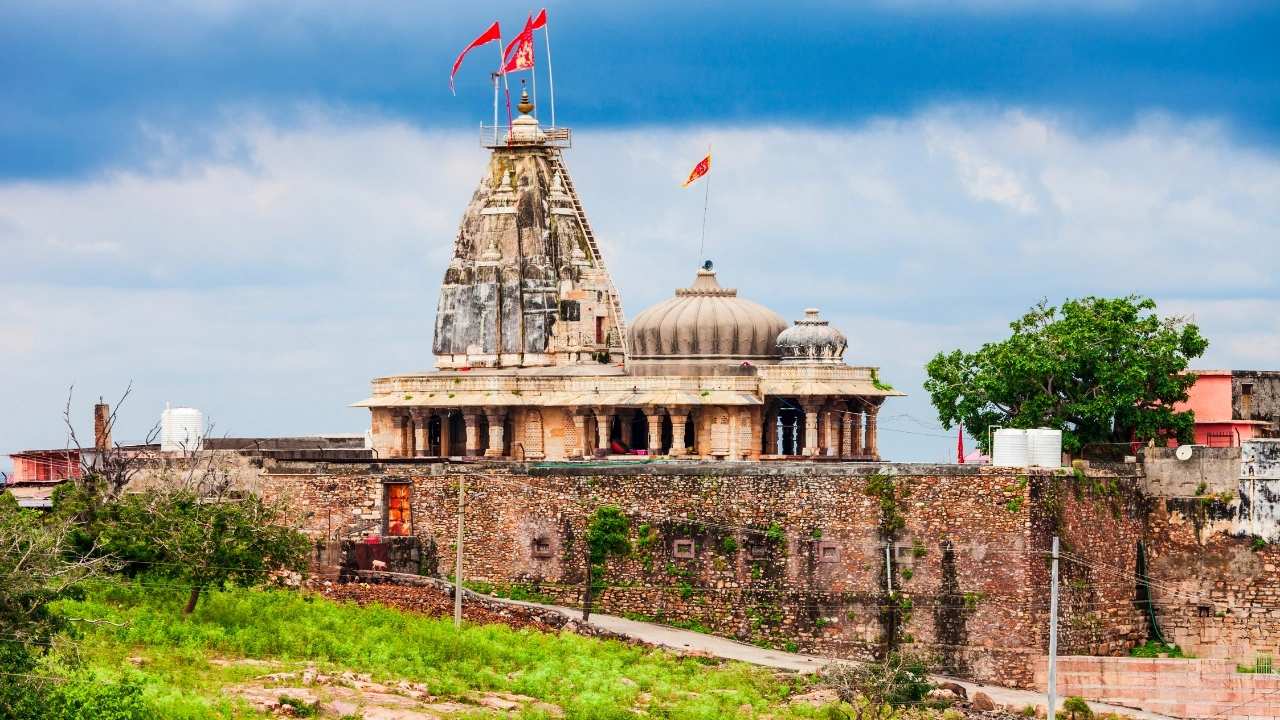
A short distance outside the main town sits the Rukmini Mata Temple, dedicated to Krishna's wife and, according to belief, his chief queen. This shrine is also thought to be around 2,500 years old, and it has a completely different energy than the busy main temple — fewer people, more stillness, and some genuinely beautiful architectural detailing if you slow down and actually look at it instead of rushing through.
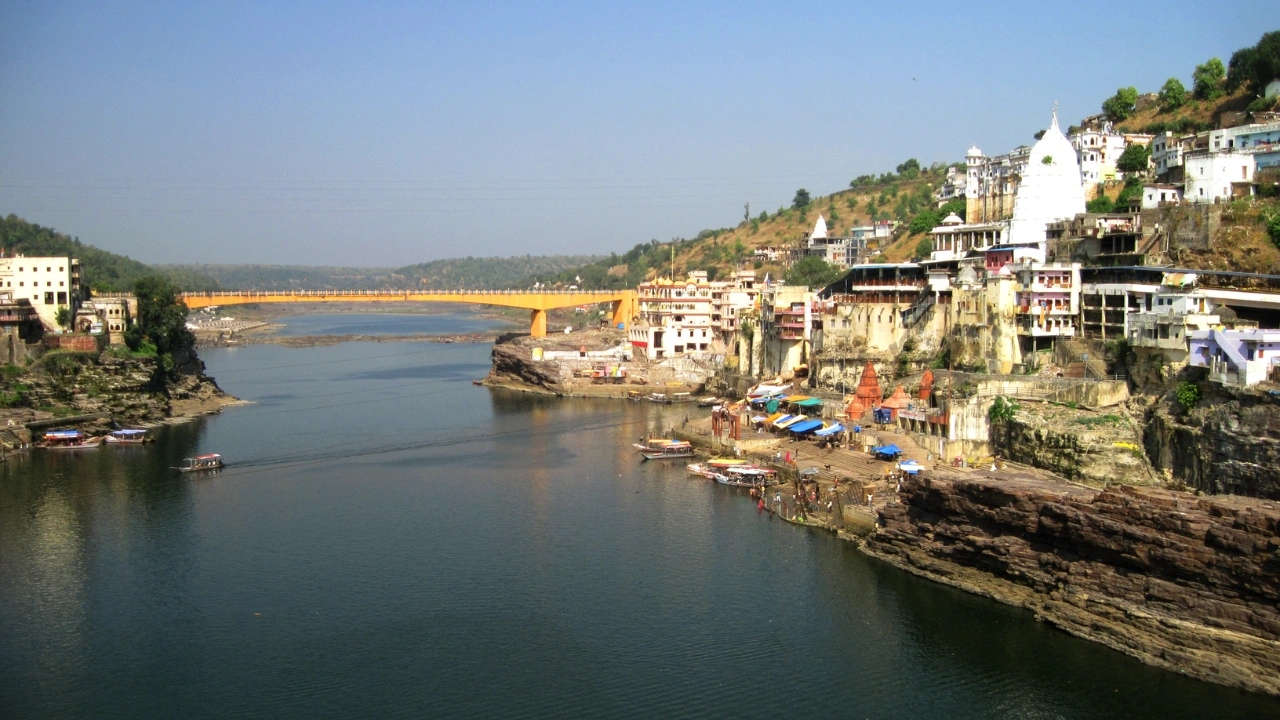
About 17 kilometers from Dwarka, and roughly 8 kilometers from Bet Dwarka, sits the Nageshwar Jyotirlinga, one of the twelve Jyotirlingas dedicated to Lord Shiva scattered across India. Because it's so close to Bet Dwarka, plenty of travelers combine both in a single day trip. The temple itself is compact — smaller than you might expect for something this significant — but it draws a steady stream of devotees who consider it one of the more meaningful stops on their journey. It also tends to be noticeably calmer than some of the larger, more crowded Shiva temples elsewhere in India, which some visitors actually prefer.
Getting to Dwarka is more straightforward than you might expect, even though it's tucked away on Gujarat's western coastline.
By Train: This is probably the most popular route. The Okha Express connects Ahmedabad directly to Dwarka, and there are also direct trains running from Delhi, which cuts out a lot of the usual transfer hassle.
By Bus: Gujarat's state-run bus network connects Dwarka to all the major cities in the region, and the roads themselves are generally in decent shape.
By Air: If you'd rather fly most of the way, the closest airports are in Jamnagar and Rajkot, and both have reasonably good road connections onward to Dwarka.
Accommodation here is genuinely easy, no matter your budget. Right around the Dwarkadhish Temple you'll find everything from simple guesthouses to mid-range hotels, all within easy walking distance of the main sites. If being near the water matters to you, the area close to Gomti Ghat has some solid options too. And if you'd rather have a bit more comfort and a few extra amenities after a long day of temple-hopping, there are resorts a little further out from the town center that tend to offer a more relaxed stay.
Timing your trip matters more than people expect. The window between October and March is generally considered the best time to visit Dwarka, since the weather stays mild and comfortable enough for walking around all day. April through June brings serious heat, so unless you enjoy sweating through your pilgrimage, it's worth avoiding. July through September is monsoon season, and while the town does look lovely with the rains, humidity and unpredictable weather can make sightseeing a little more work than it needs to be.
Dwarka isn't trying to impress you with size or spectacle. What it offers instead is something steadier — a coastal town where spirituality and everyday life have been woven together for so long that you can't really separate the two anymore. Whether you're there for the Krishna temple itself, the quiet boat ride out to Bet Dwarka, or just the sound of the sea against an ancient shoreline, it's the kind of place that stays with you a lot longer than the trip itself does.
Two full days is a comfortable amount of time. That gives you a day for the Dwarkadhish Temple, Sudama Setu, and Rukmini Mata Temple, and a second day for the boat trip out to Bet Dwarka along with a stop at Nageshwar Jyotirlinga.
Yes, it's a genuinely easy and safe town for solo travelers. The main sites are close together, the local transport is reliable, and there's always a steady flow of other visitors and pilgrims around, so you're rarely walking anywhere completely alone.
Modest clothing is expected — shoulders and knees covered for both men and women. Comfortable, easy-to-remove footwear is a good idea too, since you'll be taking your shoes off before entering most temples.
Yes, the temple welcomes visitors of all backgrounds. Just keep in mind that photography inside the inner sanctum isn't permitted, and it's worth moving through respectfully since it remains an active place of worship, not a museum.
You'll need to take a short ferry ride, which departs regularly throughout the day from a jetty near the coast. The crossing itself only takes a short while, and it's honestly one of the more enjoyable parts of the whole trip.
Not particularly. Accommodation, food, and local transport are all reasonably priced compared to bigger Indian cities, which makes it a fairly budget-friendly stop even if you choose to stay somewhere more comfortable.
Being a temple town, most food here is vegetarian, and you'll find plenty of Gujarati thalis, fresh farsan snacks, and prasad-style sweets sold near the temple complex. It's simple food, but it's usually made well.
Definitely, and a lot of travelers do exactly that. The two towns are connected by road and are commonly paired together into a single Gujarat pilgrimage itinerary, usually with a few extra days added for the drive and additional sightseeing.
There's no official restriction, but keep in mind the trip involves a boat ride and some walking on the island itself, so it's worth considering mobility and comfort with water travel, especially for older travelers or very young children.
If time is tight, prioritize the Dwarkadhish Temple and a sunset walk across Sudama Setu — that combination alone captures a lot of what makes Dwarka worth visiting in the first place.
Your email address will not be published. Required fields are marked *
Recent Post








0 Comments