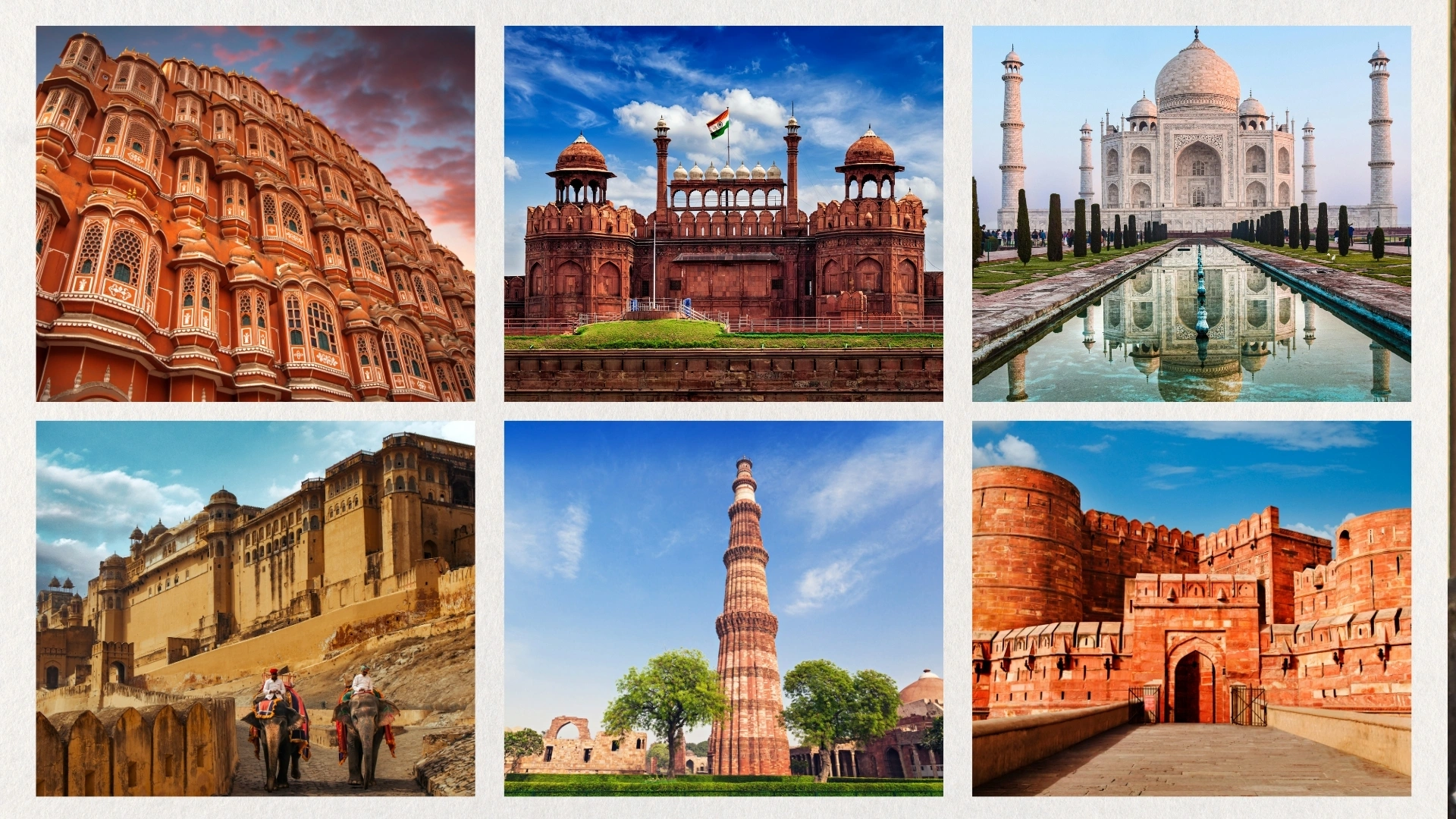
Three cities. Three very different personalities. One unforgettable journey. Delhi brings together centuries of history and the energy of modern India. Agra is home to the Taj Mahal and some of the country’s finest Mughal architecture. Jaipur adds colorful markets, grand forts, royal palaces, and the unmistakable character of Rajasthan.
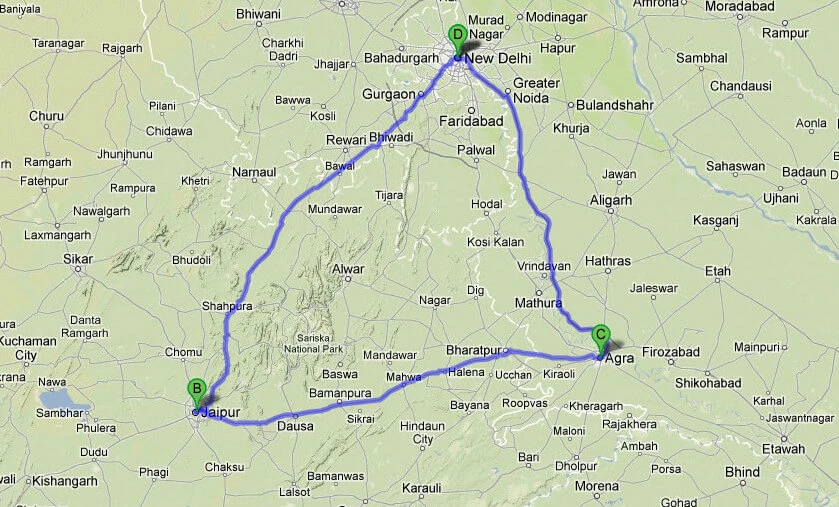
Together, Delhi, Agra, and Jaipur form the famous Golden Triangle of India— one of the most popular routes for travelers visiting India for the first time. The route is relatively easy to combine, but knowing what is actually worth seeing can make a big difference, especially if you have only four or five days.
So, what are the best places to visit in Delhi, Agra and Jaipur? The answer depends on your interests, but a well-planned trip should balance famous landmarks with local neighborhoods, food, culture, and enough breathing room to enjoy each city rather than simply checking attractions off a list.
Delhi is often the starting point for a Golden Triangle itinerary, and it deserves more than a quick stop. The city combines Mughal monuments, British-era landmarks, colorful bazaars, religious sites, and modern neighborhoods.
India Gate is one of Delhi’s best-known landmarks and an easy addition to a first-time sightseeing itinerary. The grand war memorial stands along a broad ceremonial avenue and is particularly atmospheric in the evening.
If you are planning things to do in Delhi, India Gate works well as part of a wider sightseeing day that includes central Delhi landmarks.
Often considered one of the finest examples of early Mughal architecture in India, Humayun’s Tomb is surrounded by formal gardens and is a rewarding stop for travelers interested in architecture and history.
Its design is also important because it helped establish architectural ideas that later appeared in other major Mughal monuments. For travelers who enjoy historical places in Delhi, this is one to keep on the list.
Qutub Minar is one of Delhi’s most impressive historic monuments. The towering minaret and surrounding archaeological complex offer a glimpse into the city’s long and layered past.
Set aside enough time to walk around the complex rather than viewing the tower and leaving immediately. It is one of the must-see attractions in Delhi for first-time visitors.
The Red Fort is closely connected with Delhi’s Mughal history. Its massive red sandstone walls and historic buildings make it an important stop for anyone exploring Old Delhi.
Pairing the Red Fort with Old Delhi gives you two sides of the experience: monumental architecture and everyday street life.
If monuments show you Delhi’s history, Old Delhi lets you feel it. Chandni Chowk is packed with narrow lanes, shops, food stalls, markets, and an incredible amount of activity.
It can be busy and overwhelming, but that is part of the experience. Travelers interested in Delhi food tours, local markets, street photography, and everyday culture will find plenty to explore here.
Agra is best known for one extraordinary monument, but the city has more to offer than the Taj Mahal. A good Agra itinerary combines Mughal architecture with time to experience the city at a comfortable pace.
The Taj Mahal is the centerpiece of the Golden Triangle for a reason. Its white marble architecture, gardens, symmetry, and history make it one of the world’s most recognizable monuments.
For many travelers, seeing the Taj Mahal at sunrise is one of the highlights of an India vacation. The early light can create a completely different atmosphere from the busier hours later in the day.
If the Taj Mahal is high on your list, plan your visit carefully and allow enough time to enjoy the monument rather than rushing through it for photographs.
Agra Fort is another essential stop. The enormous red sandstone fort was once a major imperial residence and offers impressive views, historic halls, courtyards, and a deeper understanding of Mughal power.
It also helps put the Taj Mahal into historical context. Visiting both on the same trip creates a much fuller picture of Agra’s Mughal heritage.
Located across the Yamuna River from the Taj Mahal, Mehtab Bagh offers a different perspective of the monument. It is a good option for travelers looking for photographs, quieter surroundings, and a change from the main Taj Mahal complex.
It can be particularly appealing around sunset, depending on the season and local conditions.
Often nicknamed the “Baby Taj,” this smaller marble monument is worth visiting for its detailed decoration and elegant design. It is sometimes overlooked by travelers focused only on the main attractions.
For visitors interested in Mughal architecture in Agra, it adds another layer to the city’s architectural story.
Jaipur feels different from both Delhi and Agra. It is the capital of Rajasthan and is known for royal architecture, colorful bazaars, forts, crafts, textiles, jewelry, and a distinctive pink-toned cityscape.
Amber Fort is one of the most memorable sights in Jaipur. Built on a hill outside the main city area, the fort combines large courtyards, decorative halls, gateways, and sweeping views of the surrounding landscape.
Give yourself enough time here. Rushing through Amber Fort can mean missing many of the architectural details that make it special.
Located in the heart of the historic city, City Palace offers a look into Jaipur’s royal heritage. Its courtyards, buildings, decorative details, and museum collections make it one of the top places to visit in Jaipur.
It is also a convenient stop when exploring other attractions in the old city.
Hawa Mahal, or the Palace of Winds, is one of Jaipur’s most recognizable landmarks. Its distinctive façade features rows of small windows and creates one of the most photographed scenes in the city.
A quick stop can work well here, especially if you are combining it with nearby markets and other Old Jaipur sights.
Jantar Mantar is a fascinating stop for travelers who enjoy science, astronomy, and unusual architecture. The historic astronomical instruments demonstrate how earlier observers measured time and tracked celestial movements.
It is a good reminder that Jaipur’s heritage is not limited to forts and palaces.
Leave some room in your itinerary for Jaipur’s markets. The city is known for textiles, block prints, jewelry, handicrafts, leather goods, and traditional souvenirs.
If you are looking for shopping in Jaipur, markets around the old city can be a great place to see local craftsmanship and pick up something that feels connected to Rajasthan.
For a first visit, four days can work if your priority is the major highlights and you are comfortable with a fairly active schedule. Five days gives you more breathing room and makes it easier to slow down in each city.
A typical 4-day Golden Triangle itinerary might look like Delhi on the first day, Agra on the second, Jaipur on the third, and a return to Delhi on the fourth. Exact timing depends on arrival and departure schedules.
If you have additional time, adding another night can make the journey more relaxed and give you more opportunities for local experiences.
The three cities are connected by road and rail, and the best option depends on your travel style, schedule, and budget. Private car travel is popular with international visitors because it allows more flexibility with sightseeing stops and hotel transfers.
A private Golden Triangle tour can also simplify logistics because transportation, sightseeing plans, and local guidance can be coordinated in one itinerary. Travelers who prefer independent trips may choose trains or a combination of transportation options.
The cooler months are generally the most comfortable for sightseeing across the Golden Triangle. October through March is particularly popular because daytime temperatures are usually more manageable than during the hottest part of the year.
If you travel during warmer months, plan outdoor sightseeing around the cooler parts of the day, carry water, and allow time for breaks. Weather can vary, so checking conditions shortly before your trip is always sensible.
The Golden Triangle is rewarding, but it can also be busy. Delhi is enormous, Old Delhi can feel intense, Agra’s major monuments attract crowds, and Jaipur involves both city sightseeing and fort visits.
Comfortable shoes are useful, modest clothing is appropriate for many cultural sites, and a flexible attitude will make the experience much more enjoyable. Give yourself time for traffic, security checks, meals, and unexpected moments.
Most importantly, do not judge the trip only by how many attractions you can visit. Some of the best memories can come from a local meal, a market conversation, a quiet courtyard, or watching the city change from morning to evening.
A strong itinerary should mix major landmarks with experiences that help you understand the places you are visiting. In Delhi, combine monuments with Old Delhi. In Agra, pair the Taj Mahal with other Mughal sites. In Jaipur, balance forts and palaces with markets, food, and local crafts.
This approach makes the trip feel less like a checklist and more like a cultural journey through India.
For travelers booking through Maharaja Trails, the goal should be to choose an itinerary that matches your available time, interests, pace, and comfort level. A well-planned Delhi Agra Jaipur tour can be tailored around the experiences that matter most to you.
If you have never visited India before, the Golden Triangle offers an introduction to several sides of the country in one journey. Delhi gives you history and modern city life. Agra brings you face-to-face with Mughal heritage and the Taj Mahal. Jaipur introduces you to Rajasthan’s royal traditions, colorful markets, forts, and crafts.
That variety is what makes the route so appealing. In just a few days, you can experience Indian culture, history, architecture, food, shopping, and local traditions without trying to cover the entire country at once.
What are the best places to visit in Delhi, Agra and Jaipur?
Top highlights include India Gate, Humayun’s Tomb, Qutub Minar, Red Fort and Old Delhi in Delhi; the Taj Mahal, Agra Fort, Mehtab Bagh and Itmad-ud-Daulah in Agra; and Amber Fort, City Palace, Hawa Mahal, Jantar Mantar and Jaipur’s markets in Jaipur.
Is 4 days enough for Delhi, Agra and Jaipur?
Four days can cover the major highlights with a fairly active itinerary. Five days or more allows a more relaxed pace.
Which city should I spend the most time in?
It depends on your interests. Delhi has the widest range of attractions, Agra is focused around Mughal heritage, and Jaipur offers forts, palaces, markets and Rajasthani culture.
What is the most important place to see in Agra?
The Taj Mahal is the main highlight, but Agra Fort and other Mughal monuments add valuable historical context.
What should I not miss in Jaipur?
Amber Fort, City Palace, Hawa Mahal and Jantar Mantar are among the essential first-visit attractions.
What is the best time to visit the Golden Triangle?
October through March is generally popular for comfortable sightseeing weather, although conditions vary by month.
How do you travel from Delhi to Agra and Jaipur?
You can travel by train, road, or private vehicle. A private car offers flexibility for sightseeing and transfers.
Is the Golden Triangle good for first-time visitors to India?
Yes. It combines major historical monuments, cultural experiences, food, shopping and different regional environments in one manageable route.
What should I wear on a Golden Triangle tour?
Comfortable, breathable clothing and walking shoes are practical. Modest clothing is appropriate when visiting many cultural and religious sites.
Is a private Golden Triangle tour worth it?
For travelers who value flexible timing, door-to-door transportation and personalized sightseeing, a private tour can make a short itinerary easier and more comfortable.

Your email address will not be published. Required fields are marked *
Recent Post











0 Comments