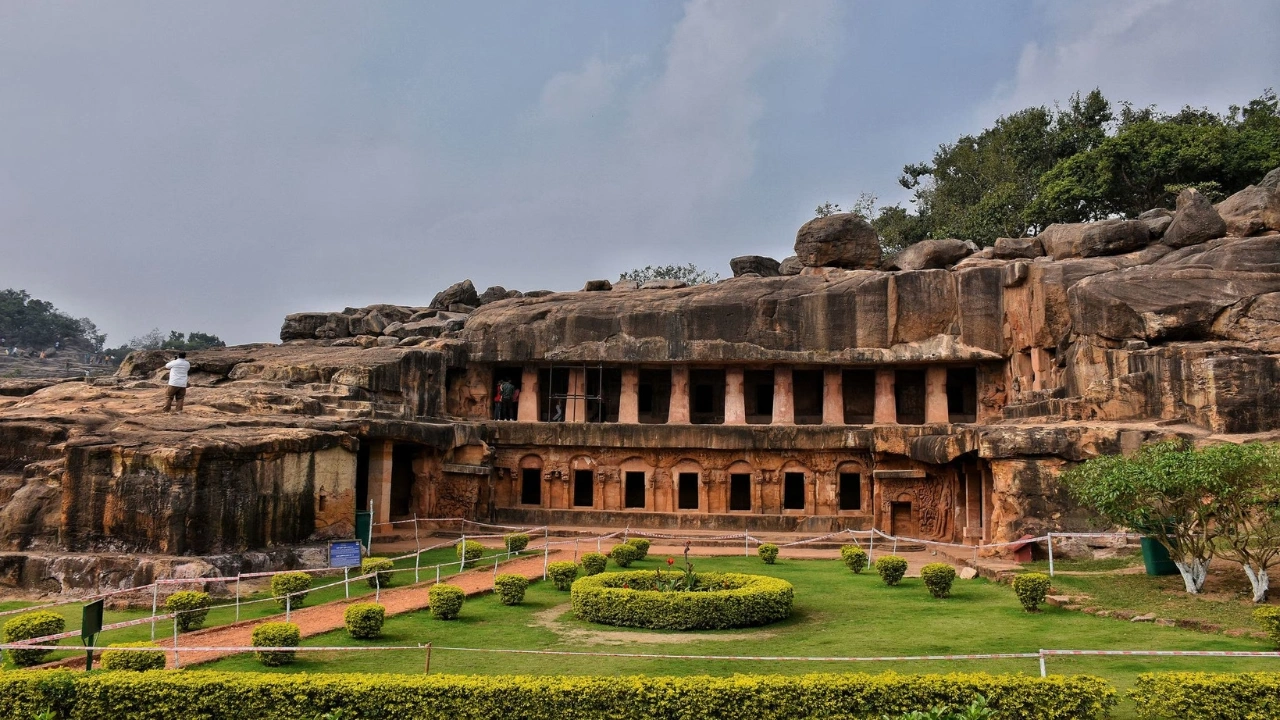
Just a short drive from the busy, fast-growing city of Bhubaneswar, there are two sandstone hills that seem to belong to a completely different century. They're called Udayagiri and Khandagiri, and honestly, nothing quite prepares you for how they make you feel once you're standing in front of them.
These twin hills are home to a network of rock-cut caves carved nearly 2,200 years ago, somewhere around the second century BCE. They aren't just old structures sitting around collecting dust and tourists — they're one of the earliest surviving records of Jain history in India, carrying stories of art, spirituality, power, and discipline that still feel surprisingly relevant today.
To understand Udayagiri and Khandagiri, you first need to understand Kalinga — the ancient kingdom that once covered much of present-day Odisha. Kalinga is best remembered for the brutal war fought with Emperor Ashoka, a battle so devastating that it's said to have changed Ashoka's entire outlook on life and pushed him toward Buddhism.
But Kalinga's story didn't end there. Out of that same soil grew the towering temples of Konark and Puri, and alongside them, a quieter, less flashy tradition — Jainism, along with its distinctive art and way of life. Udayagiri and Khandagiri are, in many ways, the physical proof of that tradition.
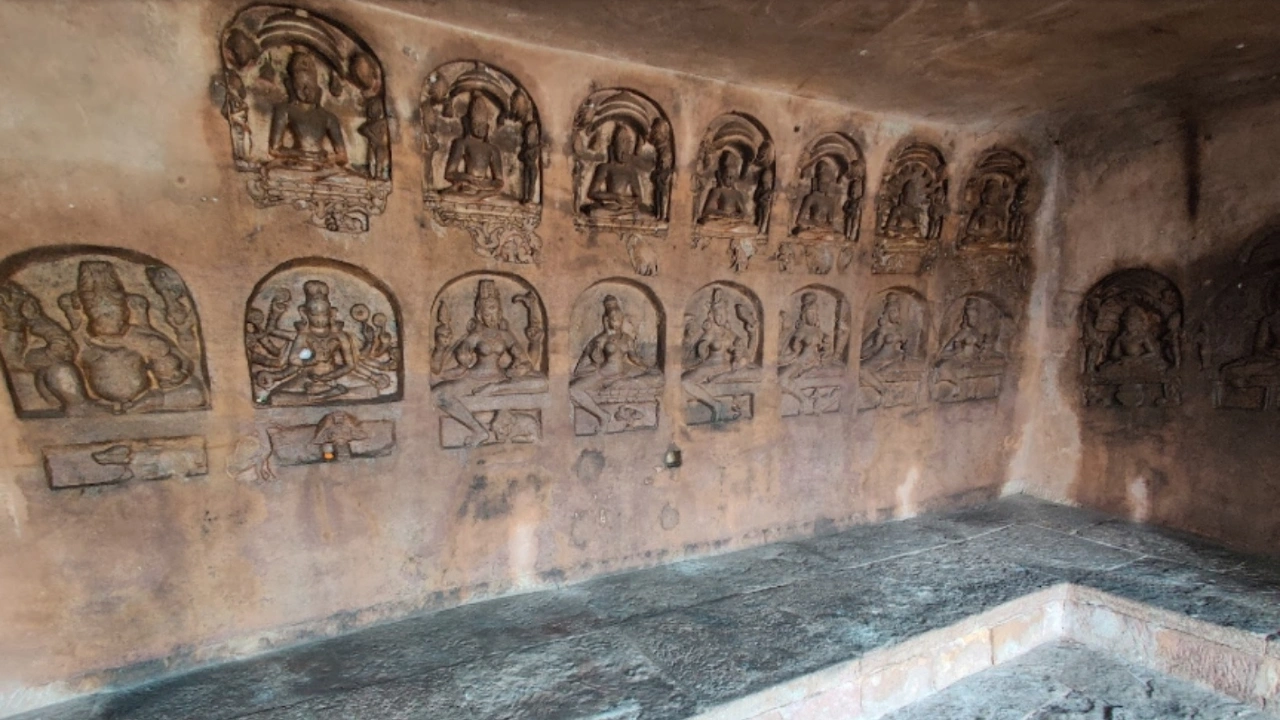
Both hills owe their existence to King Kharavela, a ruler of the Mahameghavan dynasty who is considered one of the most important patrons of Jain art in Indian history. But here's what makes these caves genuinely different from other famous rock-cut sites like Ajanta and Ellora: they weren't designed as comfortable dwellings.
That single detail changes how you experience the place. You're not walking through a palace. You're walking through what was essentially a spiritual training ground.
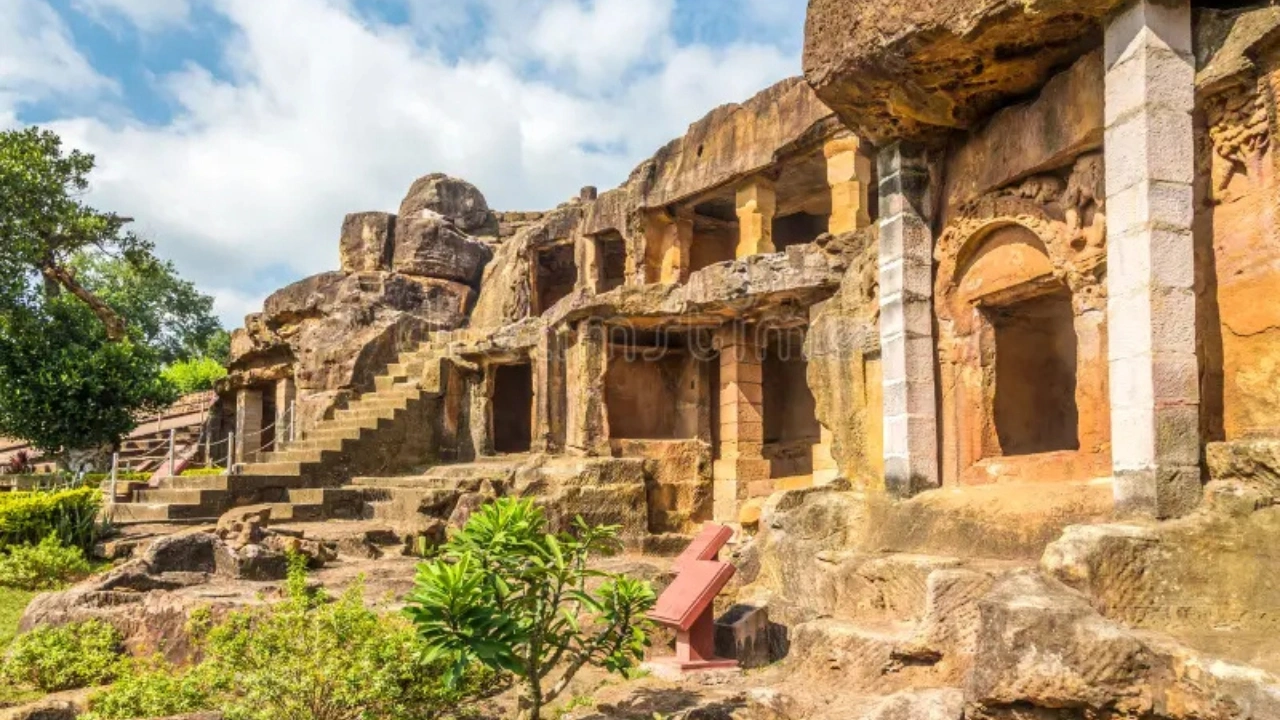
The name Udayagiri literally translates to 'hill of sunrise,' and it's easily the more artistically elaborate of the two hills. If Khandagiri is about stillness, Udayagiri is about storytelling — its walls are covered in carvings that bring an entire ancient world back to life.
The single most famous cave here is Rani Gumpha, or the Queen's Cave — a two-storied structure that's considered the crown jewel of the entire complex. What sets it apart is the sheer detail packed into its carvings.
Standing in front of these carvings, it's hard not to feel like you're reading a stone version of an ancient newspaper — snapshots of what people actually cared about, celebrated, and remembered.
Another cave worth slowing down for is Ganesh Gumpha, notable for housing one of the earliest known depictions of Lord Ganesh in Indian rock art. It's a smaller, quieter space, but its historical weight is enormous — it marks a moment when this now-universal deity was still fairly new in visual form.
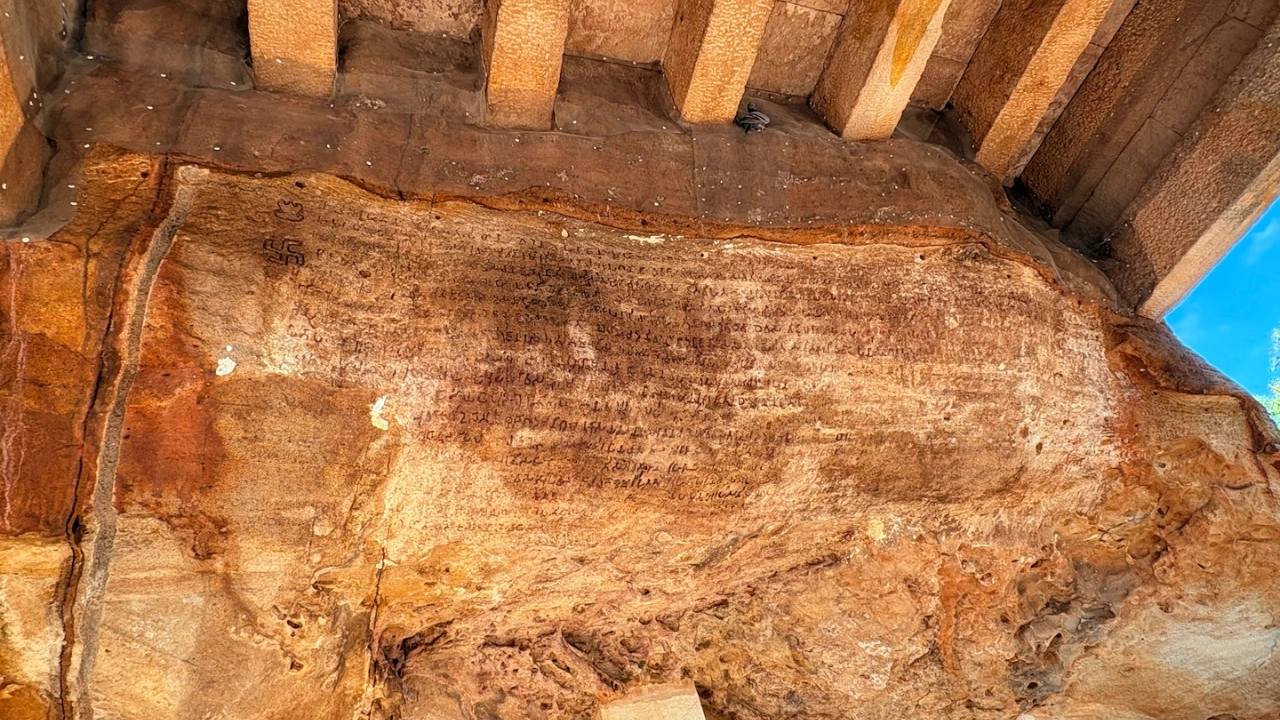
If there's one cave that historians get genuinely excited about, it's Hathi Gumpha, or the Elephant Cave. This is where King Kharavela had a lengthy rock edict inscribed, describing his political achievements, military campaigns, and cultural contributions in his own words.
This inscription isn't just decorative — it's one of the most important primary sources for understanding early Odishan and Jain history. Reading about a king's reign is one thing. Standing in front of the actual rock where he had his own voice carved for future generations is a completely different feeling.
Where Udayagiri feels expressive, Khandagiri feels introspective. Its layout isn't as uniform or grand, but that's precisely the point — this hill was built for depth, not display.
It's easy to imagine why Jain monks chose this particular hill for prolonged periods of solitude. There's a stillness here that you don't often find at heritage sites, which tend to be loud with footsteps, cameras, and chatter.
Travelers who visit often describe something similar: a feeling that time has folded in on itself. Some caves at Khandagiri and Udayagiri are still used today — you might actually spot a sadhu meditating quietly inside one of the chambers, continuing a tradition that's over two thousand years old without any interruption.
Climb to the top of either hill and you get a view that sums up the entire experience in one glance: on one side, the weathered, ancient caves carved by monks centuries ago; on the other, the modern skyline of Bhubaneswar, humming with traffic and technology. Few places let you see the past and present sit so comfortably side by side.
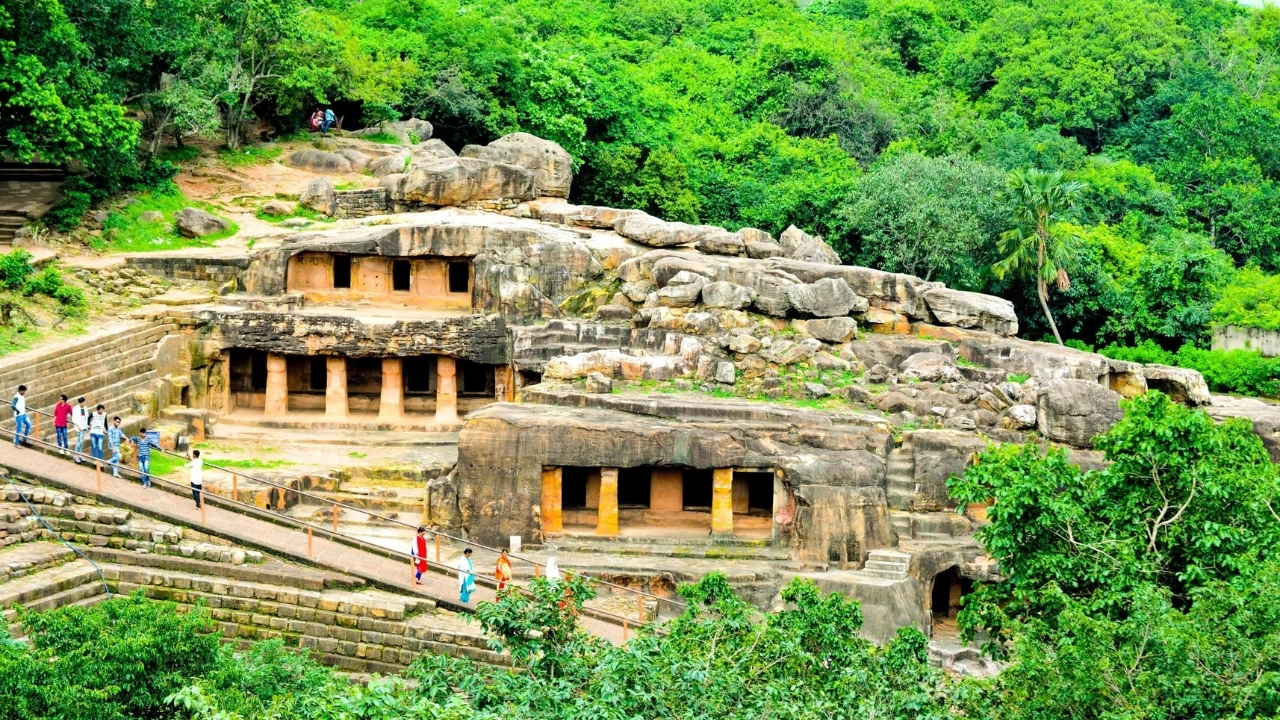
For anyone with even a passing interest in history, art, religion, or culture, Udayagiri and Khandagiri offer something rare — they're not just a place to look at, but a place to actually feel. You're not viewing history from behind a glass case. You're walking through it, touching the same rock surfaces, standing in the same chambers where real people once lived out disciplined, quiet lives.
You can literally stand in front of a rock edict where a king's own voice has been preserved for over two thousand years, or step into a meditation chamber where monks and saints still occasionally sit in silence today. That kind of continuity — between then and now — is what makes this destination so hard to forget.
They sit just outside Bhubaneswar, the capital city of Odisha, on two adjoining sandstone hills. The location makes them an easy day trip from anywhere in the city.
Most of the caves date back to around the second century BCE, making them roughly 2,200 years old and among the earliest surviving examples of Jain rock-cut architecture in India.
They were commissioned during the reign of King Kharavela, a ruler of the Mahameghavan dynasty who was a major supporter of Jain art and religious practice.
Udayagiri is more artistically elaborate, with carvings depicting dance, hunting, and mythology, including the famous Rani Gumpha and Hathi Gumpha caves. Khandagiri, on the other hand, is simpler and quieter, built more for meditation and penance than display.
Rani Gumpha, or the Queen's Cave, is a two-storied structure known for its detailed carvings of dance, hunting scenes, and mythological stories, offering a rare window into ancient social life.
Hathi Gumpha houses a lengthy rock inscription by King Kharavela describing his political and cultural achievements, making it one of the most valuable historical records from early Odisha.
Yes. They were built primarily as dwellings and meditation spaces for Jain monks, designed around simplicity and discipline rather than comfort.
The most comfortable months to visit are between October and February, when temperatures are cooler. Early mornings are ideal for photography because of the soft natural light.
A relaxed visit covering both hills, including time to appreciate the carvings and inscriptions, typically takes about three to four hours.
Nearby sites like Lingaraj Temple, Dhauli Shanti Stupa, the State Museum, and Ekamra Kshetra pair well with a visit here, making it easy to plan a full day of sightseeing around Bhubaneswar's history and culture.

Your email address will not be published. Required fields are marked *
Recent Post













0 Comments